Pages

Showing posts with label change. Show all posts

Tuesday, May 10, 2022

Goodbye, Toronto

I’m saying my goodbyes to Toronto. I’ve seen my last Hot Docs Festival film, and I’m just back from my last author program. I’ve probably had my last roti, checked out my last book at my local branch library, gone to my last art workshop. Horror of horrors, I’ve even watched my last play.
 
The thing about my Urban Infusion Months is that I get attached. I embrace my new city – even my new neighborhood – and then I feel such nostalgia over leaving it. I leave little bits of me and my experiences all over.
 
When I first arrived and wrote my last post about the thrill of being a little bit scared, a little bit curious; my friend Helen replied, “How are we friends when we’re so different?! Reading this one made me realize how much I now like creating new routines and avoiding confusion!!”
 
As I told Helen, “I definitely create new routines. It’s just that they’re new routines, not the same old, same old for the past 35 years!”
 
So I’d start off every morning checking blogTO to see what new things they’d found for me. And I’d stop off at my Riverdale Branch Library where the librarian posted a new poem every day of April for Poetry Month.

Many nights, I’d catch The Great Canadian Baking Show – four seasons’ worth! – after I figured out the TV remote. I learned that Montreal-style bagels have bigger holes than New York bagels and they’re boiled in honey water instead of plain water. They look scrawny and burnt as opposed to New York’s plump and golden, but that honey water holds a LOT of garlic and onion. So when blogTO announced the opening of Kettleman’s Bagels, I headed down there to check them out and watch the bakers in the window. I do that a lot. A half-dozen bagels are coming back to Alaska with me.

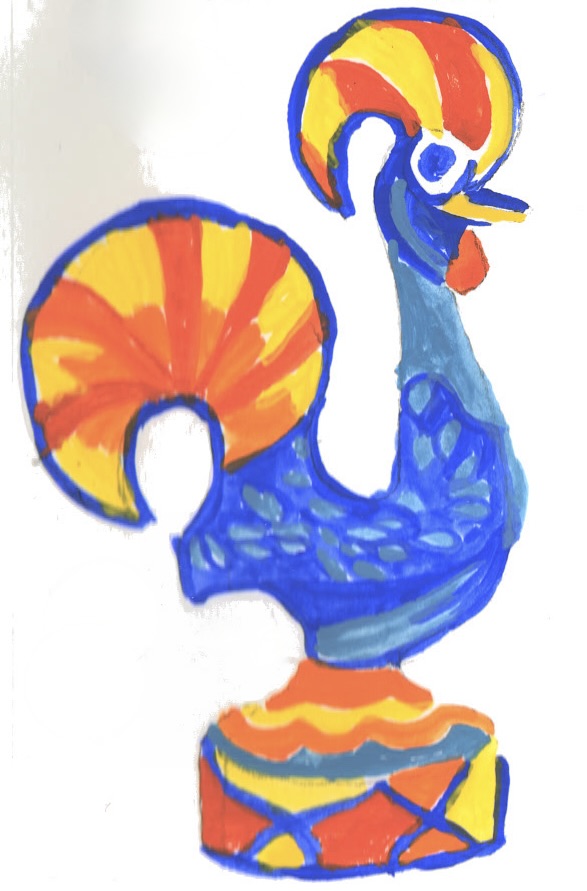
I learned where the Apple store was when my external hard drive crashed, so I knew where it was when Tim lost a cable. Around the corner, Yael has put the recipe for my hair color in the files so she can repeat it. When I discovered that Nova Era Bakery in Little Portugal has a wonderful little café in back, I took Elizabeth and Tim there, too. It’s my new “Spot,” right near Galo de Barcelos.

I have my favorite FreshCo, my favorite COBS Bread, my favorite Bulk Barn, even my favorite Dollarama with my favorite licorice. I have my favorite streetcar (although Tim insists I’ve never met a streetcar I didn’t love). I have a tried-and-true walk up the hill to the subway, and I know where the bad puddle exists permanently in Riverdale Park. I even have a favorite spot on the couch in the apartment living room.


Still, no one sits next to anyone on the TTC yet, and there’s even distancing spaces in theaters, so my salvation has been Meetup: Walking Adventures with Deb. Several times a week, Deb leads us through the nooks and crannies of Toronto to the glorious greenery of the ravines, paths, and rivers. We’re outdoors and unmasked and walking and talking. Siobhan, Penny, Anna, Phyllis, Janet, Alison, and so many other welcoming folks made such a difference. I see what’s ahead on the calendar, but I won’t be here.
 
On Sunday afternoons, the Danforth Jewish Circle let me be a part of their Jewish community and their art workshop to create a print for a tapestry for the sanctuary. Now I’ll only see photos when it’s finished.


In all my reading and conjecturing about parallel lives and multiverses, I think about all the branches of my lives that take off after I’ve left them. There’s the Anchorage Barbara, the Toronto Barbara, the New York Barbara, the San Francisco Barbara, and even the Costa Rica Barbara. If I’d stayed in one place, I could hold my life close and let it continue. But by starting new lives in several places, I have to let them go.
 
This is the sweet and sad part. I have to let them go.
 
Because there’s another part of me that wants to lie with Tim on our back deck in Anchorage and look out over the yard that’s held barbecues and potlucks, croquet games and badminton games, Sophie’s playhouse and once-healthy spruce trees. To bask in all the history of 37 years in one spot.


Monday, April 11, 2022

Toronto -- Round Two

Here I am now – culturally-infused, foot-sore, and exploration-happy – in my latest Urban Infusion Month. Hooray! I’m back in Toronto – three years to the day – but this time for two months. So far, I’ve done Manhattan, London, Toronto, and the Covid-aborted Philadelphia; but Toronto was my favorite of them all.

 I’ve been thinking about what these trips do for me.

  • Yes, they’re a chance to get Spring earlier than it comes to Alaska (although Toronto has had snow and winds that suck the warmth right out of me).

  • And yes, I feed my live-theater lust – I’ve already been to five plays here with two more in the next few days.

  • And yes, I get to be car-less while happily gorging on transit.

  • I get to escape meal-planning; grazing on ethnic street food or fruit returns hours to my days!

These are four really big reasons.
 
My only difficulty can be social isolation. There was that rough time in London because British people don’t talk to people they don’t know, but Toronto was special because Torontonians talk to everyone!
 
But this is a Covid-changed world. Even Torontonians don’t talk to everyone anywhere. Everywhere – including on transit – we’re six feet apart, wearing masks, and not making friends. But on the other hand, the rest of the world isn’t very far away: with Zoom, I still meet with my Alaska book club, Bricolage art challenge group, and my siblings. Some days I don’t even feel like I’m gone.

What I’ve learned so far is what my months really do for me. They confuse me. They stump me. They fill my days with riddles and glitches, happy accidents and utter confusion. When I get on a bus I’ve never been on before, I have that squirrelly nervous feeling: What if I miss my stop and end up God knows where? I sit on the edge of my seat.

I seek out this feeling; it’s why I’m here. It’s the Quest for New-ness, the thrill and mystery of non-stale, non-stagnant (without my fear of heights). I do my produce shopping in Chinatown, where everything is way cheaper. Lately, the big crop is strawberries. Two big baskets of strawberries for $2 each (and that’s Canadian dollars!). But over there, on the next table – same vendor – they’re $1 each. How can that be? Why?


Because $1 strawberries go bad twice as fast as $2 strawberries.

I try to be helpful at grocery stores, bringing carts in from the lot to the store. But yesterday, when I saw a woman loading her car, I offered to bring her cart back in, and she looked askance at me. Why? Well, when I returned the cart, there was a little plastic thing hanging, and when I attached it, a dollar – a loonie – popped out! Uh, oh! I bet that woman is telling her family about the panhandler taking her cart money!


My day is filled with things that need figuring out: Why does the remote work easily to turn things on but has a terrible time turning things off? How do people easily deal with their milk in floppy, plastic bags? Does the Sweet’n Low paper go in the Blue Bin, the Green Bin, or garbage?
 
Oh, I have bigger questions: Why did Matthew Wong’s exhibition at the Art Gallery of Ontario appeal to me so much? Was it because they were all blue, that they spoke of isolation, that they had simple lines, that Wong was self-taught, that he was bipolar and killed himself at 35? Was it the work itself or the artist’s pain in creating it? Is that why Van Gogh moves me?

In the play, “Gloria,” when Gloria shoots everyone in her workplace except Dean, Kendra misses it all because she’s out getting coffee and Nan is hiding under her desk. All three write a book from his/her perspective and argue about who has the right to “the story.” Who owns any story?
 
Big questions and little ones. When I wake up in the morning, I have to remember the new place where I store the cereal, which drawer has my underwear. Is it easier to go up Spadina and walk west or Bathurst and walk east?
 
Nothing is routine, and the strange interrupts the ordinary at a moment’s notice. Every day, at any moment, I can get a jolt of difference, newness, confusion – even panic. And wonder, too. I like living like this.


Sunday, April 4, 2021

The Elusiveness of Normal

I’m not sure I can be normal again.

I’m fully vaccinated, about to leave 29° snow behind for a vacation in Maui, and these are my thoughts: Should I take some calming medication before sitting on a crowded airplane with a mask on for five hours? This is a plane where everyone has had to have a negative Covid test within 72 hours, but that’s not it.

I’m not scared of Covid; I’m scared of realizing that normal is no longer possible.

I look back at the past year; I’ve made a family recipe art book, tackled art projects, organized an online theater-watching group, read a bazillion books. I even was incredibly excited about getting a chocolate-dipped ice cream pop!

But now, I wake up adrift. Plans don’t excite me. I’m sick of snow, sick of skiing, sick of Netflix, sick of cooking, sick of grocery store pickup ordering, sick of my computer. I started posting poetry on signs on my yard, and now I’m sick of poetry. Sometimes I actually don’t feel like reading, which is truly cataclysmic. Vaccination has been like spotting a finish line and totally sagging before you cross it.


We just restarted our athletic club membership so I could swim again … and I haven’t gone. I’m not worried about catching Covid at the club, not worried about germs. I’m worried that swimming won’t feel good.

Early on in my Third Third, I discovered the Big Three that were necessary for a happy Third Third:

Without teaching at the Alaska Literacy Program, without in-person classes with OLÉ, my days have become sort of adrift. My ability to adapt has petered out. The only schedule I have is on the computer: a writing class, author interviews, recorded theater. Only occasionally am I “of use.” My community is on Zoom.

Our daughter quit her first job, one she had loved. For the last year, I characterized our phone calls as her trying to convince herself she was happy with her job. She faced workplace issues complicated by working remotely, and she was valiant in framing things positively, but her heart was no longer in it. It became just too hard and she quit. Hooray! She radiates happiness now. I’m a big supporter of eliminating negative conditions quickly and decisively.

But the ones I’m in – the ones we’re all in – just aren’t quickly and decisively going away, and I’m losing the ability to convince myself that “X will be fun; let’s do X!” Or even “I feel like doing X.” Or even “X has to be done, suck it up and do it.” I don’t suck it up anymore; I just drift.

I know that my negative conditions don’t include illness or death, job loss, or eviction – as many people’s do – and I’m grateful for that. I know that the snow I’m sick of covers a yard I may appreciate when the snow melts. For goodness sake, I’m heading to Maui! (stop whining!) But I also know that the Big Three for a happy Third Third have been disrupted, and it will take time to re-create the Third Third that works for me.

We’ve had our first fully-vaccinated guests for dinner, been guests for the first time in someone else’s fully-vaccinated home. Both those times felt just like the old normal once we were in them. Really. But they took some psychic lifting to actually do them. They’re still not a new normal.

We may have landed in this pandemic suddenly, but I think we’re going to have to lift ourselves out of it with baby steps.


Wednesday, March 4, 2020

Monopoly of the Third Third

Did your Monopoly game have wooden houses and hotels or plastic ones? And are they green and red?

Did your Monopoly have a cannon as a token piece to move around the board? Or an iron? A wheelbarrow? A thimble? And pewter ones, not golden?

Did your Monopoly have yellow Community Chest cards? Were Mediterranean and Baltic purple?

Alas, the Monopoly of our First Third is no more, and not just because of all those variations (Boston-opoly, Big Bang Theory Monopoly, National Parks Monopoly, etc etc etc). Not only is Monopoly now cashless – with plastic debit cards! – but the newest involves voice banking. You press your token’s button and say, “Buy Park Place,” and your bank account is adjusted.

So, I asked, “How do kids learn how to make change without paper money?”

No one uses cash anymore? Oh.

One sister may have the Monopoly game we grew up with, but the box fell apart after all the masking tape holding it together dried up and fell off. Now it’s somewhere in a giant Macy’s gift box.

My Monopoly is a “deluxe” edition: my tokens are golden-colored and I have a steam locomotive, but my houses and hotels are still wooden. I think I requested it as a birthday present one year, but it suffered from two-on-one-itis and fell out of favor. (two-on-one-itis: when the other two greedy, cackling players gang up, make a deal, and leave you with nothing but going round and round until eventual bankruptcy).

During my month in London, I discovered a whole museum exhibition on board games. Monopoly was created in 1904 by Elizabeth Magie as The Landlord’s Game and was designed to illustrate the evils of exploitative landowners (yes, the ones who cackle when you land on their property). It was produced in the U.S. beginning in 1935.

More recently, my friend Steve blogged about playing Monopoly with his granddaughter, and he discovered the cashless version. So that’s what sparked my latest Monopoly investigations.

For example, during World War II, MI6 made a special Monopoly for POWs held by the Nazis. It had maps and compasses and real money hidden inside to help with escape attempts. Wow! And Neiman Marcus once sold a completely chocolate Monopoly – even chocolate money and deeds – for $600.

You can really go down an Internet rabbit hole about Monopoly: “speed dies” and documentaries, world championships and strategic analyses of which properties to buy. Even Monopoly metaphors: Don’t we all know what a “Get Out of Jail Free card” means? Or “Do not pass Go. Do not collect $200.” It’s part of our language.


I once thought the most drastic change to Monopoly was when I first played with friends and they did that Free Parking jackpot thing: all the tax revenues get put there for the lucky lander. Well, the Free Parking jackpot has nothing on these variations:
  • Collecting $2 million at GO, not $200
  • Airports instead of railroads
  • Houses, hotels – and skyscrapers
  • Buying brands (not properties) 
I guess if you’ve been around since 1935 – not us! – you need a few makeovers now and then. Think of it this way: Monopoly is actually a great Third Third role model, creatively reinventing itself over and over again.

Yes, but the Monopoly my Third Third remembers will always be that Monopoly of my First Third. And yours?

Wednesday, August 15, 2018

My Friend, the Car

My beloved Subaru reached its Third Third, too. Twenty years – what’s that in car years? In Barbara-car-years, we still had miles to go.

My previous Subaru was called the Flintstone Car. You know, where Fred’s feet stuck out the bottom and powered the car? Well, the bottom was so rusted on my car, you could see pavement. That was fine by me.

Until one day, after a storm, Tudor Road was full of puddles and standing water. I hit one while driving and next thing I knew, I was covered in mud. Sophie, in the back seat, was shouting, “You’re all dirty! You’re filthy! What’s happening?” It was absolutely shocking; I was positive the windshield had disappeared. How could I be so totally spattered in mud? Mud was dripping from the ceiling. I should have put something over the holes in the floor.

Okay, so that car finally got replaced. I bought this Subaru in 2002 in Massachusetts. Sophie and I were beginning the National Waterpark Tour, ultimately traveling 10,000 miles in 2½ months back to Alaska – via 24 waterparks. We bonded with that car.


It had its trials. It bumped into a 4-hour old Dodge truck once, a stationary boulder another time. It had dents on the side, and it had a glued-together rear view mirror from a too-tight back into the garage. I still can’t figure out why I ended up with pieces of leftover black plastic after I glued it all together. I had enough for a mirror and a quarter.

But it reached the point where I couldn’t put gas in it. I knew there was a rusted fuel pipe problem, but it had been going on for years and was supposed to go on for more. When I put the gas nozzle in, I had to wiggle it around and then I was never sure whether I was poking a hole in the pipe or not. So I’d start pumping.

And gas would slowly pool out from under the car. In a panic, I’d shut off the pump, but the spill response guys were already on it, spreading barriers.

So I thought, “You just have to get the nozzle in tight. Don’t let it dangle.” So I went to another gas station … and the same thing happened. I was hugely embarrassed. Somehow, I managed to fill the tank. Whew!

Next time – by now, filling my car with gas was a trauma – I managed to get it to fill without incident. And then when it reached half a tank, the gasoline pooled out again. I started to worry the spill response guys would recognize me and turn me in.

And then, a few weeks ago, I was out doing a ton of errands. I was running on vapor, and the car wouldn’t fill with gas. I mean, gas flowed, but it didn’t linger in the car; it just ran out all over the place. Now I was in a panic: I had a car with no gas and no way to put gas in it.

I ran home, got on Craig’s List and had a new used car in four hours.


Everyone likes my new Subaru Outback. The color is called Lapis Blue Pearl, and it has a key fob with buttons that beep when I lock or unlock the car. (Now you can tell how old my previous car was.) It has all sorts of things on the dashboard – a back-up camera! – but I still haven’t learned how to program the radio. The manual is two inches thick.

Did you ever watch Car 54, Where Are You? on television? There’s an episode where Molly Picon doesn’t like all the modern conveniences newfangled gadgets in her brand-new apartment building, so she harasses the developers to have it remodeled to her specs. The final image: an old tenement building, just the way she likes it.

My other car was little; this car seems swollen. It’s my car on steroids. The guy selling me the car politely said car manufacturers weren’t aiming to please me; I was at the end of my car-buying life. And yes, if I keep cars for 20 years, I guess this is my car for life, for my Third Third.

And my old Subaru? It became a donation to public radio, a fitting end for a good friend. It took us back and forth to work, school, and friends. It took us on adventures; it took us on errands. It schlepped projects and purchases, kids and groceries. It kept us safe, dry, warm, and mobile. I miss its dented, rusty, not-big self.

Now if only I can replace my bumper stickers, maybe I’ll learn to love this new car, too.


Tuesday, December 5, 2017

Driver Ed: Third Third Style

Driver Ed in our First Third: harrowing films of terrible car accidents, screeching brakes, bodies burnt to crisps.

Driver Ed in our Third Third: harrowing statistics like, “Seniors aged 65 and over are more than twice as likely as younger drivers to be killed when involved in a crash;” that we need 20 times more light to see at night at age 40 than at age 20; that deaths in crashes start increasing around ages 60-64.

I decided to click on all those AARP emails about saving 30% for a limited time only – with a promo code! – on the Smart Driver™ online course so I’d get an insurance discount. It looked easy enough: there were six units, and it would take about four hours. I could do it on my own schedule.
The man and the woman instructors said this was all about change: we and our bodies are changing, our cars are changing, and road conditions are changing. It became clear that I wasn’t the only one in my Third Third: my 2001 Subaru was in its Third Third. It doesn’t have half the gizmos new cars have. Gizmos may make driving safer, but gizmos apparently also add to the confusion.

Right off, the novelty impressed me. The instructors switched from video to PowerPoint-looking things, to little interactive games. I had to click on the little clouds to see how many deaths per 1,000 crashes occur at each age.


Right away, we hit my personal fear factor: vision. Older drivers have trouble with glare, with switching from looking out the windshield to looking at the dashboard, to seeing contrast. I already know dusk is the roughest time for me driving. In a car, I’ve learned it’s hard to switch from the road to the cheat sheet with my directions written on it.

I’ve written about my “Agony at the Eye Doctor,” but this course put eye doctor agony in my car. They described a vision test I’d never even had: contrast sensitivity. I’d better tell my eye doctor about that. I have a new thing to worry about.

But vision wasn’t enough: we had to move on to the big fear factor: brain health. As we age, we experience changes in “memory, processing speed, attention, and brain regulation skills – overall executive function” – Oh, no! She named the nightmares! If driving is a complex balancing act, “the idea that our mind isn’t working as well as it used to can be frightening.” You think?

Okay, a bit of First Third explanation: As a teenager, the week before my road test for a driver’s license, I was out practicing with my mother. At the top of a hill, an inattentive driver was on the wrong side of the road and rammed into me head-on. In a big old Buick, the engine sat in the front seat with us, and my face went into the steering wheel.


I decided I wasn’t going to drive. Ever. Cars were tons of weaponry on the road, and “other guys” were everywhere.

This continued for a couple years until my parents were tired of chauffeuring me everywhere. So I learned to drive. Unwillingly. Hence, a happy career in public transit and a love affair with buses and street cars.

Living in Anchorage, having a child, having to be places – driving is what I do now. It’s what my mother did, too, which worried her kids a lot. The course talks about that, about how to have The Conversation with a person who shouldn’t be driving.

Mostly, the course upped my attention, always a good thing. Meanwhile, I got to click on icons, click on highway signs, and click on talk bubbles. I got to move the car into the right garage. I wouldn’t call it a video game, but I did win dollars off on my car insurance.


Thursday, July 20, 2017

A Library for ALL my Thirds

I’ve been suffering withdrawal the last couple of weeks. Library withdrawal. Our main library, Loussac Library, was closed for the big remodel, and for a library-aholic, this has been rough.

As I thought about it, I realize the library is the one institution that figures significantly in all my Thirds. From my first introduction to the little old library in New Jersey that smelled of books, to the library I inhabited through high school, to the Youth Services section Sophie and I practically lived in, the library is where you might find me if I’m not home. Even now, I’m an every-other-day-er.

I’ve had an office way in the bowels of the San Francisco Public Library, did the public information and promotion for Anchorage Public Library, and got my library cards as soon as I arrived in Manhattan and London for my months. I’m not part of a community till I’m a Friend of the Library.

The library took me through the First Third of preparing for adulthood. At midnight, when the library closed on campus, hundreds of bicycles took to the street. The library was the place where I read the reserved reading for my Human Sexuality course. When I perceived that the guy on the opposite side of the carrel was masturbating, and I was reading that I wasn’t supposed to give him the thrill of my fear, I got up and calmly walked to the desk … until a friend reached out for me and I screamed bloody murder. (Bet you didn’t expect that last little bit of history to hide in this paragraph!)

Then in my Second Third, when Sophie expressed an interest in anything, we’d race to the library to get a book on it. Amusement parks! Rocks! Gems! The discovery of very old editions of Flower Fairies of the Garden sparked years of poetry, fairies, and gardening. When there was a parenting issue (me-first-itis, big bed fears, honesty), the librarians would help me find a picture book that dealt with that issue. As the Storytime Lady in the Alaska Botanical Garden, I spent years reading every picture book on flowers, bugs, trees, gardens, vegetables, seeds, and forest animals.


And now, the library accommodates my Third Third self. I get to do the pleasure reading I want; I get to reserve and watch too many DVDs. Even the Guerrilla Knitters meet there and decorated trees there. The library is there whenever my flexible schedule puts me there.

And then it wasn’t.

The remodel has been going on for a year. Things moved around. DVDs changed floors. Elevators opened on strange territory. Visqueen and plastic decorated the walls. Nothing looked like it used to. It was so disconcerting that I gave up on hanging out there. I put holds on my requests, picked them up on the ground floor, and went home grumpy. I felt like a curmudgeon who couldn’t happily adapt to change, and the only thing worse was when the library closed totally for two weeks.

Grump, grump, grump.

But then Wednesday happened, grand re-opening day! I took my shift as a helpful volunteer, opening the main door and greeting people coming and going. What a happy day! What a happy task!

“Welcome to the new Loussac Library!”

It was rainy and gray, but Anchorage came out for the big re-opening. People were curious, happy, and just eager to get back in. The library is the place where all of Anchorage shows up: the preschoolers, the elderly, the high-schoolers, the families. The professionals, the loungers, the get-in-get-a-book-and-get-out folks. The clusters of friends, the quiet and solitary.

“Welcome to the new Loussac Library!” I was meant for this job! What a great way to spend my time. I felt like I was opening a golden door, a welcome to heaven, to a new shiny place with new spaces and new places to sit. It will take some getting used to, but that should be easy: I’ll be spending a lot of time there.
“Welcome to the new Loussac Library!” See you there.

Sunday, April 23, 2017

This Slightly Different Barbara

Why do I do this? Why do I pick a city and find my way around it for a month? It’s for Art! Capital-A Art. (Okay, Capital-C Culture, too.) Art that blows my mind with creative thinking and new ways of looking at the world and human existence. Art that, at the end of my month, still lives inside me and has changed the Barbara that is. It may be my Third Third, but my world expands to feel as if I have six or seven Thirds to go!

Right away, I signed up to experience two hours of Slow Art Day at the National Gallery. On April 8, hundreds of museums around the world celebrate what Thoreau described: “It’s not what you look at that matters, it’s what you see.” After a brief introduction about mindfulness, focusing ourselves, and removing distractions, we were taken to a quiet gallery to sit in front of a painting. I picked Monet’s Water Lily Pond. I looked at it. It’s a bridge over a pond, lots of water lilies. I looked.

Our museum guide asked, “What does the air feel like in your painting?” Oh, wow! That air was a bit muggy, humid, but there was a breeze. Suddenly, I’d entered the painting. I kept looking, and then the painting turned liquid, turned into water. I realized that all of it wasn’t junk and leaves in the water, it was just light reflecting in it! Monet had found the light and the liquid and made water!

Mostly, she was silent, but then the guide asked, “Where are you in the painting?” and I was on the bridge. She asked, “Are you moving?” and I was in a kayak sliding through the pond, and the lilies were separating and there was so much liquid water. Sometimes I’d lose Monet’s liquid, but then – after looking again – it would come back. It would turn into water. Paint into water.

So it wasn’t that I’d found new Art; it was that I found a new way into the Art. They called the day “Relax with Paintings,” and it was all about taking the time and quiet to just look.
To find new Art, I go to the Tate Modern. Free tours of specific galleries are offered hourly, and I take a different one each time. Grace took us to Lee Ufan’s Relatum, 100 flat bands of 2-meters-long stainless steel. She said they didn’t come arranged or numbered; the museum curator had to lay them out. It was a way of making the art relate to its new environment, that the art wasn’t pre-determined and self-contained. It lived, and I liked it.
I’d managed to score a ticket to Rosencrantz and Guildenstern Are Dead. Yes, I went because Daniel Radcliffe (Harry Potter) was in it, but I’d read Tom Stoppard plays and was curious to see if they could be comprehended in performance. They’re so loaded with philosophical inquiry and lines of thought, I just couldn’t imagine being able to process them thrown out on stage.

Oh, wow, I shouldn’t have worried. The play was extraordinary … and devastating. In Stoppard’s play, Rosencrantz and Guildenstern (only minor characters in Hamlet who end up dying for no real reason) immerse themselves in existential questioning about meaning, about dying, about living. It’s brutal … but you laugh OUT LOUD. It’s brilliant.

So then, I’m back at the Tate Modern. In A Pot of Boiling Water, Song Dong of China started way back in an alley with a kettle of boiling water. As he walked, he poured it out in a stream. A line of water appeared until it evaporated and was gone. Only 12 photographs – from back in the alley to right up front – record the event. Our marks in the world are temporary. It was Rosencrantz and Guildenstern again!


The following week, the free “Listen and Learn” talk at the National Gallery was on Monet’s painting, and I was excited to hear what the curator had to say. But when I arrived, I was told there’d been a switch; now they were going to talk about some guy named Constable. Who’s he?

A couple hundred people were in chairs around a big, gloomy, jig saw puzzle painting. Yuck! The curator asked if everyone loved it, and everyone else said yes. He explained that the painting, The Hay Wain, was engraved in their DNA. He joked that after Brexit, that painting would be a test of whether you were British or not. Not-British Barbara learned to appreciate that painting. To appreciate it. I even got up to look at it close up.


I could go on and on. To not describe Marina Abromavic’s Rhythm 0 is to leave out a piece of art (performance?) that will haunt me forever. I’d seen Picasso’s Guernica in Spain, but his Weeping Woman – and the guide’s information about it – broke my heart.


Back to the National Gallery for the free “Look and Draw.” Forty of us were seated in front of Holbein’s The Ambassadors. First, a man told us what to look for in the painting (including the secret of the skull!). Then a woman passed out boards, paper, and pencils (but no erasers). She told us to look for the shapes in the painting, to map out the visible circles on our paper. Only after that, should we try to add detail and shading to specific images. The goal, she said, was to look. Mapping out the shapes first would help us see the painting in a new way. She’s absolutely right; I never would have thought to look for circles in that painting, but it worked!


Every piece deserves its own quiet Slow Art experience. I can’t crowd them all in here and do them justice. But they have all enriched me, changed me, made me this slightly different Barbara in my Third Third, and I am grateful.

Monday, March 27, 2017

Marijuana's Third Third

You know you are deep, deep into your Third Third when you are listening to a conversation about marijuana and the women are discussing cannabis and hot flashes, night sweats, and menopause.

Pause. I need to recover from that sentence.

It gets worse. They went on a personally-organized field trip to local marijuana dispensaries. Another woman is upset she wasn’t included.

You look at them. They are wearing fashionable clothes – with accessories! Their hair is nicely coifed, gray is either stylish or colored.

Another pause for brain readjustment. Sometimes I think I should not be writing blog posts; I should be writing a pilot for a sitcom.

The women decide I have to disguise them so no one reading this will guess who they are. “Angela” has always wanted to be an Angela so she is very excited at giving herself this new identity. She assigns aliases to the others. “Jolene” and I stare at the group; who are these people, and what did they do to our friends?

The women had a general idea of where a dispensary was located so they drove up and down the street till they were sure one building might be it. Once, while traveling out of town, they’d come upon a long line of people on the sidewalk. It was either a soup kitchen or an iPhone giveaway, but when they Googled the address, it turned out to be a dispensary. So I guess that gave them experience in dispensary identification.

The proprietors were very helpful. The women learned about CBD oil, which is supposed to be curative but doesn’t make you high. (But one of the women already knew about CBD oil from her son.) They learned about vaporizers. “Is that a bong? Like a perfume atomizer?” No. They got free, hand-made, terra cotta pipes as a little gift. They bought a small caramel/chocolate star.
Angela learned why her first foray into cannabis was not a success. Apparently, she learned, you have to toast something to work with it. I think she was making salve. (Not being on the field trip, my understanding of all this is a little sketchy. I took notes for the sitcom pilot, but they’re a little sparse, and there were no visual aids.) So Angela wanted to borrow someone’s toaster oven to do this in her garage. The concern: the neighbors would smell it. The solution: smoke some salmon at the same time. So maybe she’ll apply fish-scented salve to her body or eat marijuana-laced smoked salmon.

Angela tried her little star. Just a point. I’m not sure if that’s the experience that left her singing through housecleaning or if that was something else.
“Jolene” has been quiet throughout the adventure travel recap. She spent her youthful rebellion moving in the other direction from a counter-culture mother. While every now and then we all feel like we’re turning into our mothers, I imagine Jolene is watching her circle of friends turn into her mother. The field-trippers turn to her.

“Jolene, do you think your mother has some other source for marijuana?”

Jolene must recover enough because a few minutes later, she shares a text from her mother: “OMG.” Is this shock speaking or mother-daughter bonding?

Meanwhile, another friend of mine has organized Ellementa, a start-up for women to learn about cannabis wellness. And a Seattle-area assisted living community is organizing Pot 101 field trips. My Jewish newsletter just sent out a recipe for pot-laced matzoh brei for Passover: Potzoh Brei. What is the world coming to?

Unfortunately, the women have learned that cannabis doesn’t do anything for wrinkles.

But that’s because they’re not lying around on waterbeds listening to Pink Floyd. It has nothing to do with not being 20 anymore either.

Sunday, January 8, 2017

No Longer 30

Yet again, my friend Marj has given me the meat of a new blog post. This is what Marj sent me:
“I am so glad you are writing about the third third of our lives. It has changed the way I always thought. For years I had thought the thing to do is to pick an age, like 38, and then for the rest of your life make sure NOTHING changes. Stay the same weight, keep your hair the same color, keep wearing mascara when you leave the house, keep your same clothes style, keep doing the same activities – just DO NOT start looking and acting older. If you get health problems, fix them! Fast! DO NOT let any infirmities settle in!

“But as I have gotten older, it became increasingly hard to hold at 38. I was starting to feel like a failure. If only I had tried harder. When did I start to lose it? What can I do about it now?

“Then I started reading what you write about the third third. And I realized life really does have thirds. The third third just can’t be the same as the first. And that crazy second third! Who needed all that? I was aware of the concept of there being a season for everything. But I thought that did not apply to me personally. But now I have accepted that there are irrevocable thirds. And I’m in my third one. I’m no longer 38. Haven’t been for decades. And now I realize, I have not failed. I have simply progressed through life. As one does. If one is fortunate.”
It’s funny that one of the things I remember Marj telling me – years and years ago – was that my daughter thought of herself as a “work in progress.” That seemed so positive, such a healthy way of looking at the world. And yet here was Marj, thinking that we make healthy progress to a point … and then it’s downhill.

How many of us have thought – or still think – that way? What age did you pick?

I used to think I was 33. I don’t know why I picked 33. I was single, in charge of my life, a Big Boss in my organization, open to adventure, free of commitments. Long after, whenever I met people, I thought they saw me as a 33-year-old. If they were in their 30s, we were the same age (in my mind). We were all peers. I was 33 for a long time.

I stopped being 33 for two reasons. One was the crushing realization as I looked in the mirror one day that I looked old. Older than 33. The other was more positive: I was coaching, advising, and instructing 30-year-olds … and I had a lot more life experience than they did.
And I guess that’s the two sides of this whole progression through our Third Thirds: we win some and we lose some. I will never fool anyone into thinking I’m 33. Even cashiers in grocery stores offer me the senior discount unsolicited.

But I have life experience. I’ve been there, done that, and know how to make a phone call and get a reluctant company to remedy my problem. I know how to make a quilt, run a half-marathon, create a website – all things I learned after I was 33. I got to experience marriage and parenting … after I was 33.

After age 60, I got to experience Machu Picchu, re-discovery of art in my life, even the Chilkoot Trail. Less-than-60 Barbara hadn’t gotten to them yet, but less-than-60 Barbara had time constraints, obligations, resource limitations.

I’ve always known I never wanted to be 16 ever again. It’s interesting to realize that I no longer want to be 33 either.

Tuesday, January 3, 2017

Do-able Resolutions

This is the big thing I don’t understand: why – when I need to feel better – I don’t do the things that I know will make me feel better. I’ve talked with friends; I know I’m not the only one. Let’s say I feel sluggish and depressed. I know a run will make me feel better, but I don’t do it. Why is that?! What is the sabotage or lack of will that leaves me blobbing around, digging a hole for myself?

Maybe a run outside is not your thing. Maybe a hike or a social outing or a phone call does it for you. But then you don’t do it. Why is that?

Every new year, I start off hoping I’ll be a better person, maybe even Making Plans to intentionally be a better person, and it doesn’t happen. But as I mentioned here, my daughter taught me something about New Year’s resolutions: if I make them cumulative, I see progress, not the times I miss. My resolutions to work out three times a week always left me missing weeks and feeling failure; her resolution to run 500 miles in 2017 takes the miles whenever they come.

So I looked at how I wanted to grow as a person and how could I take baby steps to get there. Maybe it would be like exercising my oomph muscle. (And if I’d missed along the way, I could always race to catch up at the end of the year.)

I want to be more thoughtful, feel more gratitude.
I was so moved by the condolence cards after my mother died that I wrote thank you notes for them. I wanted people to know how much I appreciated their thoughts. My friend Linnea writes appreciation notes often. I save them (even though Linnea says, “You’re supposed to be de-cluttering!”) because they make me feel … appreciated. So: I will write 20 thoughtful notes in 2017.

See? It’s a baby step, but maybe it will feel so good, it will become a habit. If it doesn’t, I will still have written 20 notes.
I want to be more of a hostess, welcoming people into our home.
So: I will hold four dinner parties. Most years, I’ve done this, but this past year, I’m not sure. I’ve still socialized, but I want our home to be a welcoming spot. The point is, it’s not a killer task. It’s do-able.
I want to be more fit.
Here’s the 500 miles of running/skiing. I already do both irregularly, but I let things interfere. Maybe this will help on those self-sabotaging days when I’m digging my personal hole.

Since my exercise tends to be one dimensional, my muscles are pathetic. Tim and Sophie say squats are big, that they also help with getting up (for when we’re older). I hate squats. I can’t imagine anything more boring than doing squats. Tim says I should do three sets of them a day. With weights. Ha! I’ll do 50 sets (three times ten squats) in a whole year. I’ve already done one so far. Baby steps.

I want to eat better.
This one is really an odd one. I already don’t have meat in our house; I only cook vegetarian. So, of course, I thought I was getting my five servings of fruits and vegetables a day. I go through four pounds of Costco grapes a week, but I just read that it takes 32 grapes to equal a serving! Yikes! Maybe this means I need to move off beans, carbs, and cheese more. So: I will eat 15 servings of fruits and vegetables each week. Yes, I know that five a day means 75 a week, and that this isn’t a cumulative measure like the others. What should I say? Eat 780 servings in 2017? Too much recordkeeping. Besides, I don’t know how to count the vegetables IN my meals and this is just to get me thinking more intentionally about meal preparation. I’m going out today to buy baby carrots. It only takes nine of them to make a serving.
I want to keep up closeness with my sisters.
So: I’m going to have five Skype or phone conversations with them in 2017. We email regularly, but that’s email.
Missing from these resolutions are the things I already do. I read 75 books last year without noticing, trained for and ran my half-marathon as a matter of course, and wrote this blog because I do (This is post #203!). I don’t need to resolve to do those things. For whatever reason, desire and will are sufficient for them to happen.

Some researchers say willpower is a muscle to be exercised. Others say we can suffer willpower depletion if we have to rely on self-control too much. If you draw on willpower too much, you drain your self-control for the next situation.

Baby steps.

Sharing Button