Pages

Showing posts with label routine. Show all posts

Tuesday, May 10, 2022

Goodbye, Toronto

I’m saying my goodbyes to Toronto. I’ve seen my last Hot Docs Festival film, and I’m just back from my last author program. I’ve probably had my last roti, checked out my last book at my local branch library, gone to my last art workshop. Horror of horrors, I’ve even watched my last play.
 
The thing about my Urban Infusion Months is that I get attached. I embrace my new city – even my new neighborhood – and then I feel such nostalgia over leaving it. I leave little bits of me and my experiences all over.
 
When I first arrived and wrote my last post about the thrill of being a little bit scared, a little bit curious; my friend Helen replied, “How are we friends when we’re so different?! Reading this one made me realize how much I now like creating new routines and avoiding confusion!!”
 
As I told Helen, “I definitely create new routines. It’s just that they’re new routines, not the same old, same old for the past 35 years!”
 
So I’d start off every morning checking blogTO to see what new things they’d found for me. And I’d stop off at my Riverdale Branch Library where the librarian posted a new poem every day of April for Poetry Month.

Many nights, I’d catch The Great Canadian Baking Show – four seasons’ worth! – after I figured out the TV remote. I learned that Montreal-style bagels have bigger holes than New York bagels and they’re boiled in honey water instead of plain water. They look scrawny and burnt as opposed to New York’s plump and golden, but that honey water holds a LOT of garlic and onion. So when blogTO announced the opening of Kettleman’s Bagels, I headed down there to check them out and watch the bakers in the window. I do that a lot. A half-dozen bagels are coming back to Alaska with me.

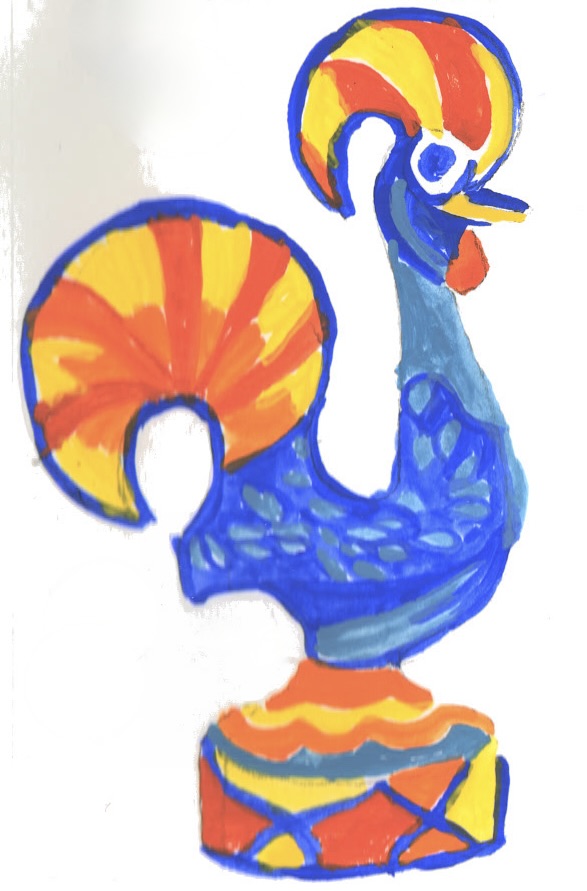
I learned where the Apple store was when my external hard drive crashed, so I knew where it was when Tim lost a cable. Around the corner, Yael has put the recipe for my hair color in the files so she can repeat it. When I discovered that Nova Era Bakery in Little Portugal has a wonderful little café in back, I took Elizabeth and Tim there, too. It’s my new “Spot,” right near Galo de Barcelos.

I have my favorite FreshCo, my favorite COBS Bread, my favorite Bulk Barn, even my favorite Dollarama with my favorite licorice. I have my favorite streetcar (although Tim insists I’ve never met a streetcar I didn’t love). I have a tried-and-true walk up the hill to the subway, and I know where the bad puddle exists permanently in Riverdale Park. I even have a favorite spot on the couch in the apartment living room.


Still, no one sits next to anyone on the TTC yet, and there’s even distancing spaces in theaters, so my salvation has been Meetup: Walking Adventures with Deb. Several times a week, Deb leads us through the nooks and crannies of Toronto to the glorious greenery of the ravines, paths, and rivers. We’re outdoors and unmasked and walking and talking. Siobhan, Penny, Anna, Phyllis, Janet, Alison, and so many other welcoming folks made such a difference. I see what’s ahead on the calendar, but I won’t be here.
 
On Sunday afternoons, the Danforth Jewish Circle let me be a part of their Jewish community and their art workshop to create a print for a tapestry for the sanctuary. Now I’ll only see photos when it’s finished.


In all my reading and conjecturing about parallel lives and multiverses, I think about all the branches of my lives that take off after I’ve left them. There’s the Anchorage Barbara, the Toronto Barbara, the New York Barbara, the San Francisco Barbara, and even the Costa Rica Barbara. If I’d stayed in one place, I could hold my life close and let it continue. But by starting new lives in several places, I have to let them go.
 
This is the sweet and sad part. I have to let them go.
 
Because there’s another part of me that wants to lie with Tim on our back deck in Anchorage and look out over the yard that’s held barbecues and potlucks, croquet games and badminton games, Sophie’s playhouse and once-healthy spruce trees. To bask in all the history of 37 years in one spot.


Sunday, May 2, 2021

The Quest for New-ness #5

When I first started this blog, I was really intent on my Quest for New-ness. On my website, my New Thing label has 84 posts, more than any other. I described it this way:

If I don’t want to get stale in my Third Third, I need newness. I need jolts and shake-ups. Actually, my whole life has been about wanting and liking jolts and shake-ups, but the difference is that now I feel I need them to ward off any encroaching stagnation.

And that was even before the relentless staleness of Covid-19.

So here I am after days weeks months of same-old-same-old. But then we got vaccinated and Tim announced, “Off to Maui!” which jolted me so badly I had to hide for a while. But I emerged, boarded the plane, and traded Alaska snow and cold for Maui sun and heat.

This is the thing about sun and heat: you can lie down in it, you walk around in shorts and tank tops in it, you put sunscreen on in it. You maybe stay indoors during the hottest part of it, but mostly you are breathing air-that-has-not-been-in-four-walls – outside air! You do that for most of the day. It’s kind of miraculous.

But you still have to eat, you still have to acquire food and do something with it – cook it or order it or look at a menu about it. You still have to take showers and wash your hair. You still have to brush your teeth. You still have to put dirty clothes in the dirty-laundry bag.

You still have to wake up and go to sleep. You still have to decide what you’re going to do today: hike or beach or pool? You still have to get in a car that you’ll drive to wherever you might want to sightsee. The car will still need gas. If you read a book, you still have to open it and turn the pages.

Do you see where I’m going here? Most of our days repeat most of our days no matter where we are. And if you’re suffering from too much routine and the psychologists report an emotional state of “languishing,” then you just might not be getting the New-ness your spirit requires.

I grew up on Long Island, so I grew up on water. Beaches and pools. During those sticky, humid days, water was our sanity, our pleasure, and our thrill. I would body surf till my scalp was covered in sand, till I carried loads of sand in my swimsuit. The town pool was daily until my friends got driver’s licenses, then the beach became a daily after work option. I am better in water than on land.

And on Maui, the water is delightful. You can swim in it and play around in it, but it’s very shallow. The thing you can’t do is body surf in it. You just can’t grab a wave and let it take your body over a four-inch surf. That must be why everyone is holding a boogie board, which I don’t quite get: is it like a toy? A baby surfboard?

One of the new things on this trip was staying in a condo. We’d never done that. In this condo was a supply closet with beach chairs and beach mats, umbrellas and towels, flippers and wet suits. And boogie boards. It was like a personal summertime R.E.I.

So we took the boogie boards to the beach. Let me tell you about boogie boarding!

I stood out there, holding the board in front of me. I know my waves; I picked a good one at the right time, threw myself forward on the board.

And I flew!       I was a bullet, flying through the water or the air or whatever it was! 

I was on top of the whole world 


until the wave disappeared below me and dropped me down – free fall! – to the next wave which caught me and took me to shore

where the next wave positively drove me up the beach on two inches of water and sand.

Aaaiiieeee! It was incredible!

When the water went out, the board was buried in sand and I had to dig it out.

I woke up.

That’s it: my fog lifted and light emerged. It wasn’t the adrenaline rush of risk (I gave up terror after the Chilkoot Trail), and no fear was involved in this at all: we’re talking shallow shore breaks. It was the sheer delight of New-ness. A brand-new experience had entered my life, charged new neurons, ignored the same-old-same-old.

Finally, an 85th New Thing!

Sunday, April 19, 2020

Einstein was right.

Einstein was right. Covid-19 proves it.

In his theory of special relativity, he looked at “space-time.” That’s where the three dimensions of space are linked with the dimension of time in the space-time continuum. So, we don’t just live in a place and we don’t just live in a certain time; we occupy “space-time.” Then, in his theory of general relativity, he realized that gravity could cause distortion in space-time, that it would warp space-time. Think of it as the weight of something pressing down like a marble on a blanket of space-time.


I study Time. I read physics books about it, science fiction about it, watch movies about it. But on some level, it’s non-intuitive. You just can’t wrap your head around it.

Until Covid-19.

My days used to begin, proceed, and end in a very linear path. (That’s called the Arrow of Time.) I woke up, did things, and ultimately went to bed. Many times, with my always-disrupted sleep cycle, things re-started somewhere around 11 p.m., but they still moved. Linearly. One minute after another.

Until Covid-19.

I still wake up (thank goodness!), and I still walk downstairs to my computer. Somewhere around the ninth or tenth news story – or maybe it’s the fourth or fifth review of the peak Covid-19 projections by state or the map of cases around the world or does the size of the dose of the virus make a difference and what about serum antibodies – time starts to leak. Or warp.


For a while, when I was researching the best prototype of face mask to sew – elastic or fabric ties or T-shirt ropes? with or without a pocket for a filter? pleated or form-fitting? – time actually disrupted. Ruptured, the physicists call it, and it’s what a black hole does.

When two black holes collide, they send gravitational waves rippling through space-time. I think the black hole of Covid-19 news updates collides with the black hole of Facebook and distorts my space-time. You probably know this scientific phenomenon as a “time sink.”

Because next thing I know, when I go upstairs – when I move my gravity-weighted body upstairs – it’s like a whole different day. I’m not quite sure where the day went.

Because I’ve bent space-time.

So maybe I’ll do something noteworthy, like go skiing. That used to be one thing in a day of many things. Now, I’ll come back from skiing, take a shower, and the whole day is gone!

That’s what happens when there’s an actual event – skiing. Many days, I’ll come upstairs and … the whole day disappears! I have so warped time that it just … folded in on itself. I am living in a Star Trek wormhole.

I’ve tried looking at the clock to see if it’s still moving at a regular pace (which is sort of pointless because Einstein said it was all relative anyway), but when I look away; whole hours pass.

In fact, some days Thursday happens before I’ve ever had Tuesday and Wednesday!

I’ve been narrowing it down a little. If I have a Zoom conversation at 10 a.m., Time holds steady for a while: Zoom keeps track and does a 40-minute countdown. But around 11 a.m., it suddenly becomes 3 p.m. The wormhole must be in there somewhere.
There’s external evidence, too. Before Covid-19, we ran the dishwasher maybe once a week. Now, we eat the same number of meals – even re-use mugs and dishes – and the dishwasher needs running every other day. Having soup each night just adds a few soup bowls; that shouldn’t explain it. Time is warping.

Passover was eight days. I don’t think so. I’ve never finished eight days with leftover chocolate macaroons, but there they are. I even loaded up and had three yesterday. (Was that yesterday?)

I can induce a total time warp. I can actually cause a black hole collision and a total rupture of time by simply pulling out a jigsaw puzzle. Time stops for jigsaw puzzles … but then it suddenly accelerates when you look up at the clock.
I wonder if Einstein did jigsaw puzzles.

Monday, November 7, 2016

Who cooks dinner?

So let’s say you enter your Third Third earlier than your spouse: who does the cooking?

Do you:
  1. Do more of the cooking because he/she is still working (and earning income) and wouldn’t it be nice for them to come home to a hot meal? (with pleasure)
  2. Continue to share the cooking/household chores because you worked hard to establish an egalitarian household and you’re committed to that in your relationship? (with pleasure)
  3. Do more of the cooking because … (same as #1, but with resentment)
  4. Continue to share the cooking/household chores because … (same as #2, but with resentment)
I know there are some people who are delighted with their newfound time to cook and prepare meals. Those are the women who lined up at the Friends of the Library book sale in front of the cookbook shelves. Those are the folks who take photos of the meals they’ve prepared and post them on Facebook. (Yes, I do know ONE MAN who does this.)

I’m not those people. Mostly, I kind of forget about eating until I have a headache, BUT when I cook, I like it to be healthful, non-meat, and not processed. That takes time. This is the weekly cycle we’re on:

Monday: I cook delicious healthy meal with side dishes. I have to stop what I’m doing at 3:30 for this to be possible, but I am pleased with my effort, and my efforts are appreciated.
Tuesday: I cook delicious healthy meal with side dishes. I have to stop what I’m doing at 3:30 for this to be possible, but I am pleased with my effort, and my efforts are appreciated.
Wednesday: I have to make extra trips to the store for a missing ingredient that is not in stock at two stores (corn meal!?). This particular meal turns out to have a few more steps in it than I’d anticipated so my day gets eaten up with meal preparation. I decide husband is not properly appreciative. I have to stay up late to get my personal stuff done that I couldn’t get done during the day.
Thursday: I assemble a meal of delicious leftovers. I watch husband like a hawk, evaluating whether he is eating his way through the leftovers so we won’t get another meal out of them. I fill out angry survey form for grocery store that did not have corn meal in stock.
Friday: Husband is picking up on clues. He starts saying things like, “I’m making a list with some items I want to cook for a meal. Do you have anything to add?” I feel bad because he has contributed 40+ work hours to our household this week and now I am frightening him back into egalitarianism because he knows me and knows I am ready to blow. I feel very grumpy about all this, but I did not quit my job to cook dinners.

My husband and I had achieved a very nice balance during our working years. He did things; I did things. We both parented. Every now and then, I’d get miffed because my things were do-over-and-over-again things and his were big-project-achieved kind of things, but we worked out a balance of effort. I’ve never mowed the lawn; he’s never tended the garden. If something broken required glue, he fixed it; if it required sewing, I fixed it. We rotated regular meal preparation, but mostly he cooked food, and I cooked meals. Things felt even.

But now, I have more flexible, “leisure” time. And in talking to many women friends, that creates a guilty burden of “we should be” cooking dinner. And the problem with guilty burdens is that eventually resentment finds its way in. I’m sure my husband would say I shouldn’t feel this way, that I’ve earned my time, that I contribute to the household (if not at the same income level as before), but that’s because he’s nicer than I. He’d also say peanut butter is fine for dinner.

So other than giving myself a personality transplant (attempted, never successful), I’ve been trying to come up with solutions to the perceived Dinner Burden:
  1. Maybe peanut butter, yogurt, or whatever scrounging yields can be counted as a meal. Maybe dinner-as-meal is a Second Third thing. Maybe Third Third dinner needs to be re-imagined as bits-of-this-and-that, not a whole meal, but still sitting down together. Maybe a dinner meal can then be a surprise kind of thing, as in “Oh! You made dinner! What a nice surprise!”

  2. Browse my magazines and collected recipes and get enthused about cooking one of those creations?

  3. See a lot more movies at the Bear Tooth and eat dinner there?

  4. More giant soups, more salmon, sandwiches? Great volumes of leftovers? Start a recipe folder of “easy”?
Taking suggestions….

Thursday, August 25, 2016

Anatomy of a Sleepless Night

When I discovered the Big Three recommendations for a good Third Third (structure, purpose, and a sense of community), I knew my most obvious challenge was probably going to be sleeping. Or rather, sleeping on a regular basis on a regular schedule for a regular number of hours. Or, to be more accurate, sleeping. Period.

Some people fall asleep. They close their eyes, and sleep comes to them. With my husband, sleep overtakes him. For me, sleep hides. I have to hunt for it, coax it out of hiding, and hope it decides to stay.

I used to follow little schedules: no exercising after 8 p.m. Begin sleep readiness and shut-down behaviors at 9 p.m. Go into bed at 10 p.m. Hope.

When Sophie was born, that was shot to hell. I don’t think she slept through the night till she was eleven. Even if she’d slept, I’d be Alert to Her. After I stopped being crazy from lack of sleep (Did I stop?), I adapted. I simply acknowledged that every now and then, I’d “go around the clock,” stopped fretting about it, and went along pretty smoothly. If you don’t worry about being tired, you can find that you don’t feel tired. But that was my Second Third.
Right now, writing this, I’m sort of dulled. Not comatose, but just a step up. No zip. I had a long, long night.

10 p.m. Uh, oh, I already knew I’d messed up. I was reading Nicci French’s Thursday’s Child, which is fourth in her series. Her books are intelligent and clever, but they kind of make my hair stand on end. I’d decided it was a daytime-only read book, but at 10 p.m., I’d already messed that up.
11 p.m. Go into bed. Pick some reading material that will force Nicci French out of my head. Stephen Hawking’s A Brief History of Time had worked the night before. Tim’s head hits the pillow, and he’s out.

12 a.m. According to general relativity, time moves more slowly closer to the earth’s surface because of gravity so, for example, a clock at sea level will run slower than one on a mountaintop. But is the clock itself actually slowing down – its mechanism and all – or is the elapsed time slowing down? Would the clock show a minute and ten seconds, for example, or would it show a longer minute? Obviously, Stephen Hawking is not putting me to sleep. He’s giving me IDEAS! I am so absorbed in this – I’ll have to check out the 1962 water tower/atomic clock experiment he refers to – that I have two choices: get up, embrace the night, follow this physics problem to its conclusion, OR try a chemical aid.
I have several choices: Advil PM or prescription Lunesta. I have to make this decision quickly because any later, and I’ll be stuck and groggy in the morning. I go with my latest experiment, that ZzzQuil generic.

1 a.m. I’m definitely drowsy, but now my restless legs are awake in bed. My head has moved off clocks and is back with Nicci French and who did it? I have learned that there is no relation between physical exhaustion and falling asleep. Either the toggle switch toggles to “sleep” or it doesn’t. I’d gone for a hike today, been outside, drank my warm milk, done all the right things to promote “feeling tired.” No dice.

3 a.m. I am really, really trying not to fret about the clocks and gravity. I think maybe if I browse a Good Housekeeping magazine, it will be brief (short articles), not intellectually exciting, and not scary. I lie in bed.

4 a.m. I decide to get up and go out to the couch so my reading won’t disturb Tim. As I cruise around getting a blanket, Tim emerges: “What’s going on?” and scares the shit out of me. Now I’m wide awake with adrenalin pumping and might as well finish the Nicci French book. Maybe once the mystery is resolved, I can relax and fall asleep.
6 a.m. I think that works; I may have dozed off for a while. Tim says goodbye. I get the newspaper.

8 a.m. – 10:15 a.m. I may have lost some time there because I’m aware of waking up to look at the clock (which is at sea level). I feel queasy and fogged. This is not going to be one of those smooth round-the-clock days. This is going to be a mess. I miss a 10:30 gathering.

I compensate by cleaning the stove, sink, and cabinets and Googling the water tower clock experiment and Einstein’s time dilation.

Relativity question: Is my Third Third going to be longer than my previous thirds because I spend more of it awake? Is my clock running slower? Or is that just a foggy question from a sleep-deprived fool?

Tuesday, May 17, 2016

Moving the Body at Rest

My body at rest has become a body in motion. The rest of the time, I’m recovering. I know it may seem wrong to call me a body at rest when I am a distance runner, but it’s really true. I lie on the couch until I get up and run, and then I go back to the couch. This is not just metaphorical. I’m sedentary in my core. Hand me another book.

But not anymore. Not since I signed up to hike the Chilkoot Trail. I’m not sure whether that’s a carrot or a stick, but it’s certainly lit a fire under me. The fire of refusing to be humiliated, the fire of realizing the only way off the trail is over it. So I had to train. That led to the Zumba experiment, but now, with the weather turning glorious (and one little episode of barfing in the middle of a group weight-lifting class), I’m back outside.

A snow-less winter of no skiing meant I was entering the spring with enough flab for several people. I always start off slowly to avoid injury, and I usually run every other day. This avoids injury but also allows me to resume my inertia position of body at rest. This time, though, I have a rooting section called Tim. While I am a body at rest, Tim is a body-always-seeking-motion. So far, I have been able to resist.

But now, he whispers, “Chilkoot Trail,” and I gear up. We’ve added hiking to my days off. Not only do I have to practice steep; I have to practice walking, period. For some reason, I find it easier to run ten miles than to walk six. I think it has to do with standing on my feet that long or maybe it’s momentum, but I reach the groan-level much earlier with walking. Our friend Kris has been organizing weekly hikes for years, so now I show up, too.

One week it was Kincaid Park, hiking the bluff to the beach. I was glad to be with a group; maybe this would be the time I could actually find my way back from the beach without bushwhacking through brush. It was a glorious, sunny day – I applied my sunscreen – until we got to Kincaid, where the wind was ferocious. The first time I discovered the sand dunes at Kincaid, I thought I’d landed on a Star Wars planet. Woods, cliffs, rocks … and sand dunes?

Sand dunes + wind + sunscreen on face = a total crust of sand encasing my face.
The trail goes up and down, up and down. This is called “hill work.” It is work because it’s single-file and you don’t want to slow up the people behind you (Is there a hiking version of corridor rage called trail rage?). There was no smelling of the roses; we hustled along. Up and down. Up and down.

There were lots of tree roots and lots of dogs. I don’t do tree roots well. Not cracks in sidewalks, not uneven pavement, not broken branches or rocks, either. I must be a vigilant trail runner (and sidewalk walker) because tree roots eagerly await me. Tim says they’re like the trees in the Wizard of Oz when they see me. My toes are the usual victims, but I’ve been known to go down whole body, involving even my head in the calamity. Dogs just complicate the issue.
The good side to all this motion: I’ve discovered a lovely, nearby trail that has been here for all 31 years I’ve lived in Alaska and I’d never been on it. I walked a trail that I’ve only skied before – ski trails can be hiking trails in the non-winter! That was a good day; I found Joy, that shy spirit, on the trail, too.

In the midst of all this running and walking, my friend Connie passed on an article about “dead butt syndrome,” otherwise known as gluteus medius tendinosis. Ironically, you don’t get a dead butt from lying on the couch; you get it if you run too much and too exclusively. Your butt is connected to your hips, legs, and back so the pain is well connected, too. This problem goes beyond the sagginess issue, so now I have to add Other Things to my body in motion repertoire.
Some days, I actually do two things in one day: run in the morning and bike somewhere in the evening. Oh, yikes, what’s happening to me?!?

Thursday, March 31, 2016

Going solo

When I first wrote about this idea of a month in New York, even people who travel a lot said they were jealous, and that surprised me. I narrowed it down to three reactions: (1) it was New York City, (2) it was long-term, as a “resident,” not a tourist, and (3) it was on my own, without Tim.

Some married women were startled; some thought it was “brave.” Some said they’d miss their husband. One friend who took a solo trip said she didn’t miss her husband till after Day 11. My friend Helen wrote that a “solo adventure could really open up the time and space to think through all those other big questions” we have about life.

Well, I’m not sure I’m figuring out any Big Questions, but I have thought about marriage. Do I miss Tim? I’m not sure what “missing” means. With technology, it changes. We talk on the phone, we send each other emails, we make plans. (I still send him on errands.) We’re still connected.

But when I decide to go to a collage class at Materials for the Arts in Queens, I don’t have to compromise because Tim’s not interested. I don’t have to compromise on a daily basis AT ALL. Marriage is a steady dose of compromise, from not having the light on late at night to whose turn is it to cook dinner.
I plot out my activities on a calendar, and it’s heavy on the arts, literary events, theater, political and Jewish stuff. I am pretty confident that those things would never show up on Tim’s wish list of how to spend a solid month. I can imagine his groaning from 3,500 miles away. That’s why this trip is my special event and vacation, not his.

When I created my space in the apartment – clothes go here, reading material goes there – I didn’t have to confer. I didn’t even have to leave any room for Tim’s stuff. My very specific, anal-retentive organizational tendencies could just Impose Order. And when they break down and junk accumulates, it’s only My Junk.

So do I miss Tim in my space? No. Do I miss him in this life? No. I wanted this experience of solitude. I have not experienced real solitude for 27+ years, and even here, I still have conversational and emotional access to Tim. But what I have now are 24 hours in every day that I have to fill or not fill on my own. Where I have not been successful at home in finding a new rhythm and giving myself the freedom to move slowly – or not at all – I have begun to do that here. It began with just needing to recover from wearing myself out, but it morphed into just letting myself Be.

My cousin Larry and his wife Kathy are both retired, and I asked how they spend their days. Larry said he fills his day with less, does everything slower, takes more time. Kathy said her days are still filled with to-dos because they still eat dinner and require clean clothes. I thought about how I left my to-dos in Anchorage. Yes, I still make dinner and do my laundry, but it’s just me, and it’s easier. There’s just so much less.

I’m trying to understand why things are simpler. I had fish, asparagus, and a salad tonight, but I only had to make exactly how much I was going to eat. When Tim and I eat dinner, it feels like a bigger production. It feels like it takes time, requires more clean-up, invades my day. Here, it was a short respite between my afternoon adventure and my evening one. I was happy when I realized the timing would work and enjoyed preparing it; it felt like a break instead of a chore. Afterwards, I pretty much had two bowls to wash and a pan. It’s like camping, kind of bare bones.
I never forget that I am here because Tim is back home working, and I marvel at how generous and gracious he is. (I think I would be a lot crabbier.) I also know this is temporary. This is not my life; it’s a very distinct departure from my life. From the life we share. If at any moment I felt permanently alone – as if there were no Tim to return to – this would be a challenging, frightening, unpleasant experience. I wouldn’t even do it.

So, no, I don’t miss him, but it’s because I know he’s there.

Monday, December 28, 2015

All the world's a stage...


I think the first formalized stages I’d ever heard described were Elisabeth Kübler-Ross’ five stages of grief after the death of a loved one or similar bad news.


Recently, I heard of the six stages of retirement described by gerontologist Robert Atchley:

And now, I’ve discovered the Nine Emotional Stages of Holiday Travel:

1   Nostalgia 4   Frustration 7   Annoyance
2   Anxiety 5   Calm 8   Excitement
3   Productivity 6   Happiness 9   Relief

So I guess if we were just looking at the complexity of the process, it takes more steps to do holiday travel than it does to retire, and it takes more steps to retire than to get over a loved one’s dying. Okay, I’m being facetious.

Kübler-Ross’ stages don’t begin with looking forward to something – hers are all about reacting to horrible news – so she’s missing those steps of positive anticipation. But it seems to me that the other two processes are basically the same thing: looking forward to something, making plans, confronting the reality of that which you wished for, feeling bummed, and then recovering. (The travel one has more steps because it’s a round-trip: you get to visit family – with both positive and negative anticipation … and then you get to come home.)

This is called a PGIO. I learned this in college:


After hearing this, I bet you’ll see PGIOs everywhere, too. These same five steps apply to everything:
For instance, a First Third, college example: (1) I really wanted to go to that party, (2) I called up friends to go with me, (3) place was full of drunk assholes. (4) What a waste of an evening! (5) So let’s all talk about it and hoot and laugh over at the coffee house.

Now a Third Third example:
  1. My job ends in April; I can hardly wait for all that free time

  2. I’m going to take an art class, finish binding those books, finish the quilt, travel

  3. I seem to be drifting, not getting any of it done, and I’m not a very good artist anyway

  4. Yikes, what have I done! Am I going to be this worthless and unemployed for the next 30 years?!

  5. Oh, I get it: I’m making my own future. Who knew it would involve blogging, some contracts, teaching, ice skating? But I need to impose some structure for this to work.
The thing is, I have a hard time seeing these steps as describing a period of my Third Third (or any third). It makes it sound like once you move through the steps, your caterpillar has turned into the butterfly. Well, even the grief folks say that’s not true; you can keep repeating the cycle as new realizations or situations hit.

I think there are two versions of this cycle: the daily one and the Big Picture one. I had the daily one just yesterday, with the quest for the calendars: (1) Today I’ll buy my new calendars, (2) Off I go to the store, (3) They’re all out, (4) It’s taking forever to find the calendars I want; 2016 is a mess already, and (5) Wow! I found a way to get the calendars after all.

But the Big Picture one: can we only see it in hindsight? Do we only see the stages of our lives as we move out of them?

[to be continued due to the existential crisis of the author who found herself in a paroxysm of re-evaluation, self-examination, and relentless rumination]

Thursday, December 24, 2015

On my own December calendar

I just realized that when Christmas time comes around, I know I’m not part of a work place. This is how I know:

There isn’t an unreasonable amount of baked goods showing up at the common tables as people try to get it out of their house … and into their co-workers’ stomachs. (Same goes for post-Halloween) I don’t even let the stuff cross the threshold of my home.
Being Jewish in 24/7 operations like public transit, I usually took the Christmas Eve and Christmas Day shifts to free up others for their holiday. (A plus for a diverse work force!) It was actually easy duty: things just sort of tapered off. Office people started keeping irregular office hours, disappearing here and there. Phone calls and emails weren’t returned or got automatic replies: “Won’t be returning till January 4.” So unless there was some terrible snowstorm or traffic accident, things were pretty slow.

Even when I worked at FedEx, the flurry of the preceding days was finally over. We managers had hustled into uniforms and vans, picking up, delivering, and tracking packages upon packages. Everything was a hubbub … and then it stopped.
Everywhere else, the time before Christmas and between Christmas and New Year’s was slow motion time. I was in the office, but there were no meetings, no deadlines, no critical conferences. It was the time to pull out the stack of unfiled papers and file them, to create new file folders and labels, to clean off the desk. It was like readying myself for a crisp and clean New Year, like the spring cleaning of the winter.

All that changed during the Years of the Child. Then you had to have your plane reservations done a year in advance to make sure you got on school vacation flights. Every family in Alaska was aiming toward sun and warmth and we all wanted the same flights out and the same flights in. Finally, graduation came, and we were no longer constrained by the academic calendar. We could slide into January for vacations. Things got way cheaper and less hectic. I was back in the office, cleaning up files and providing office coverage during the holidays.

But it wasn’t till now, in my Third Third and not part of a consistent work place, that I realize the rhythm of my calendar has changed. I’m on my own calendar, not the work place holiday calendar, not the school vacation calendar, not the Christmas shopping calendar. Yes, there are a lot more parties and receptions – and there were all those pre-holiday crafts fairs – but that only changes my entertainment, not the schedule of my days.
Well, actually, I realize that’s not true: my volunteer teaching gigs are taking school breaks. I actually have a couple weeks without any class times scheduled. I do feel slower, more flexible, readier to say “sure, I can meet you for lunch.” I visit friends in their slowed-down work places.

So what’s different? In some ways, it’s like September. For a large part of my life, September meant school was starting. It’s when we bought new fall clothes and new school supplies. It’s when we were starting fresh, launching into something new, entering new doorways – or shepherding our kid through them. This feeling of big beginnings was way more than an arbitrary, middle-of-the-school-year New Year’s Day could arouse. It took years – years! – after the school calendar ended for me not to think of September as the new beginning. And then one day, September just became September.

And now, December 24 through January 1 is just … December 24 through January 1. What a relief.


Monday, December 21, 2015

Where is it?!?

I just needed a postage stamp.  I keep all my stamps in a cellophane envelope I got from the post office. The envelope sits in the same slot in the vertical holder on my desk that it has sat in for years. Except that this time, it isn’t there.

     [Little interlude for a tantrum. I hate when things get lost!]

My things have places. My world is a world where things have places. Maybe their place was assigned by me, but I did that with care, forethought, and a bit of obsessive-compulsiveness. It’s a kind of subconscious calculation of frequency of use, ease of retrieval, and hierarchy of need: the stamps earned a top-of-the-desk honor position. Envelopes and stationery don’t merit that kind of position; they’re in drawers. Even the scissors are in a drawer.
But the stamps should be right where they’re supposed to be! Now is where I remind myself that I’d conscientiously bought lots of Forever stamps years ago before the price of stamps went up. Losing my stamps is like losing a gift card.

I’m a little concerned it’s like the disappearance of the paper cutter (which I believe got caught up in the paper recycling and was nevermore). Maybe I took the stamps with me to the post office to attach the right number of stamps and left the cellophane envelope on the car seat with old newspaper circulars. The thing is, if they were in the house, they would automatically head to their designated spot. I’ve trained them.

Not like the AIDS memorial quilt thank you. That could be anywhere. On World AIDS Day, I discovered Four A’s had brought some portions of the AIDS quilt here for a ceremony. Back in 1989, I was working for FedEx and got them to ship up the AIDS quilt as a public service. I’d known Cleve Jones with the NAMES Project when I’d lived in San Francisco and he started the quilt, and afterwards, he’d framed a thank you for me. I thought I’d bring the framed thank you to Four A’s and give it to them. My clutter going to the perfect place where it would be appreciated as treasure!
Except I couldn’t find it. Now I can’t remember if I de-cluttered it entirely, took it out of the frame and put it in a skinnier spot (like a file), or just can’t locate it. I tore the house apart.

This is the problem with de-cluttering: you’re never quite sure if you still have it or not. And if you have it, it no longer has a designated spot.

I have always said things aren’t lost, it’s just that people stop looking for them. (I once found my contact lens on a beach.) In his blog, Steve says he cleans up “instead of looking for something, which always leads to frustration because I never find it; but if I clean up, I’ll find other things and get something done even if I don’t find what I was looking for.”

Okay, I did get a lot done instead of finding the stamps or the thank you. But that doesn’t lessen this unease I feel about things not in their places. Like, what other disorder is operating in my universe? Maybe I’m watching a few too many Star Wars episodes (VI tonight and then I’m ready for VII), but it’s like a disturbance in the Force when things go missing.

I should practice being the kind of person who just says, “It’ll turn up,” and relaxes about it. Instead of being the kind of person who keeps tearing the place apart looking.
“Okay, it’ll turn up.”


Sunday, December 13, 2015

If it's Friday, I'm there

Let me tell you how lucky I am. About nine years ago, when I was starting a radio show/podcast, my friend Shirley burst into tears. She was selling chocolates in the shape of affirmations (“You are special,” “You are beautiful.”), and she had LOTS of inventory sitting in her garage. So I invited Linnea – who was starting Alaska Dinner Factory – to my house because we were all in the same boat: small businesswomen floundering.

We added Rebekah and Kory, Lori and Aliza. We talked about printers, web developers, PR needs, pricing. We invited guests to talk with us about various subjects. We promoted each other’s businesses; Lori even volunteered on mine, helping in the radio station. And we did this every Friday at 9 a.m.

We hung on for those Fridays. First we met at Superstar Bakery, then – when Linda joined us – we relocated to Terra Bella. Some businesses closed, some babies were born, some relocation happened. Eventually, we were six: Shirley, Linnea, Linda, Lori, Ellen, and me. And then, we were way more than our businesses. Every Friday at 9 a.m.
We hung in with Linnea through all her lists, thoughts of selling, and the realization things were finally working well after all. We hung in with Shirley through chocolates, a children’s picture book, and a CD. We hung in with Linda through endless staff turnover, remodeling, and now, the launching of brunch and dinner at Terra Bella (!). We hung in with Lori through her phase down and phase out. And Ellen till she moved. They saw me through the end of one thing and the beginning of another. Every Friday at 9 a.m., give or take an hour if it was hard getting up that early.
We hung in with Linnea through her grandmother’s illness, death, and the garage sale because by then, the businesses took second stage. (And because the garage sale saga was such good sitcom material.) After one morning, I actually wrote down the 16 illuminating moments our conversation had sparked: Death, Race, Compassion. Then we added weekends, other little adventures, a special birthday party, field trips. But always Friday. Now maybe more like 10 a.m.

Slowly, as people added friends, the group got large. We couldn’t fit at one table. I had trouble with side conversations, lots of things going on at once, the resultant rattling in my brain. I stopped going. I slept in. But I always knew my Fridays were sitting at the table in Terra Bella.

Things shifted. I returned. We were now a slightly different six. Judith was there, and we took her through garage sales and a new home. Sunnie – who did not have to dance on the table to get in this blog! – joined me and the guerrilla knitters with amazing creations. She sent her husband to argue with Judith’s carpet installers.

Friday night, Judith organized Joke Night at her house. We had to come with at least three jokes. Linnea had a CD of jokes to practice; she wrote them down. Linda brought New Yorker cartoons. Sunnie was sick (second appearance in blog!). We feasted on Judith’s Som Tum, ginger ice cream, and more, and we laughed and laughed. (Judith says I got some bits wrong writing about her winning the Leonard Cohen contest, but she’s okay with it.)

What has this to do with my Third Third? Every now and then, I think our friend-making days are winding down, that most people have already made their bosom buddies. That we did that in college or when we had young children. Then I realize friendships can blossom because we’re all in some new, shared stage. And that friends and getting together can be one of the structures we create for ourselves.

So what about my Friday morning group? Some of us are working, some not. Some have children at home, some not. Some are married, some not. Some are in our Third Third, some not. I don’t know where my Third Third will take me, but this I know: we’ll be at our table Friday mornings at 9 or 10-ish. Count on it.

Tuesday, November 24, 2015

Over and over again

The other side of un-done things is the do-over-and-over-again things. In fact, it’s the do-over-and-over-again things that get in the way of finishing the un-done things. And when you finally get the un-done things done, you can’t rejoice … because there are plenty of do-over-and-over-again things waiting. Always.

Some do-over-and-over-again things do not inspire resentment, but a whole lot do. Maybe frequency has to do with it. While cooking dinner may inspire resentment, cooking Thanksgiving dinner does not. I prepare the same breakfast every single morning (my pumpkin flax granola with raisins and milk), and I still enjoy it, so maybe it also has to do with the ease of doing it. I make my bed every single morning, but I read somewhere that it’s a tiny job with a big impact – making your house look put together – and that’s true, so it feels good.

I really like doing laundry. Just not mountains of it when I’m not in the mood. But mostly, I’m in the mood for laundry, for the sense of transformation it gives me: dirty things become clean (and stay that way for a while). For the sense of order I get as I separate whites from dark colors from shirts. For the sense of pride I get because I can remove any and every kind of stain. In fact, if I am in a slump, I elect to do laundry. But laundry is not an everyday thing.

Neither is cleaning the bathroom, but I never elect to clean the bathroom. I do it because people are coming over. Then, once I do it, I again marvel at how it really doesn’t take as much time as my dread expects. And then, it looks gorgeous. Until someone gets his toothpaste on the mirror and it moves into do-over-and-over-again status.

Cooking dinner is every day. You cook, you eat, you have to cook again tomorrow. Tim and I (sort of) rotate cooking responsibility, but now that he’s working on moldings and stairs – his big project – I feel like I need to do cooking. Once I concluded that household chores tended to fall along gender lines: men got the kind of projects that yielded great satisfaction in their accomplishment, and women got the do-over-and-over-again jobs. But I guess mowing the lawn isn’t a big crowd pleaser either, and choosing new window treatments or painting a room could satisfy.

The thing is, I don’t think I had a problem with do-over-and-over-again things in the workplace. Yes, I had the same monthly report every month, the same newsletter every other month. But those things had significance, some social impact. They felt larger than mere maintenance of personal survival.

Cooking dinner is mere maintenance of personal survival. I’m trying to reframe this: “Cooking dinner is my way of caring about our well-being; I’m preparing interesting and nutritious food for us.” Dream on! Cooking dinner is a schlep of choosing menus, making lists, going shopping, cooking, watching it disappear as it gets eaten, and then having to do the whole thing over again. And over again. And yet again.
Lately, I’ve been picking recipes from my collection of torn-out magazine pages so the tastes have been terrific. I’ve experimented with equipment (the spiralizer, the pressure cooker), with ingredients (bourbon, Arborio rice, shallots), and with cleverness (lining the muffin tin with sweet potato ribbons to make a crust for individual quiches). I bought new knives that I love.

No matter; cooking dinner is still a do-over-and-over-again job.

As I think about it now, when over-and-over-again becomes too dispiriting in the workplace or volunteer life – even in recreation and leisure – I can stop. I can unemploy myself, pass on the volunteer baton, take up a new pastime.

But I have to eat dinner, and yogurt won’t cut it every night. Neither will eating out, bringing in, or eating processed.

Tonight I made such a delicious meal, everyone polished it off. Licked the plates clean. And what am I thinking? “Nuts, now there aren’t even any leftovers. I’ll have to cook again.” Forever. For my whole Third Third. Over and over again.

Thursday, September 17, 2015

When Structure Goes

When I quit my job, I torpedoed structure. Left to my own devices, I’d get involved with something and stay up all night. I’d have commitments, contracts, or meetings, and I’d do them just fine; but the rest of the time, I was a free agent. Nothing was “fixed” and there was no regular schedule. I did something because I felt like it, not because it was routine. In the beginning, this was joyful, glorious freedom.

When my book club read Daily Rituals: How Artists Work; everyone shared the daily rituals of their lives, and I cringed. There was nothing routine about my days. But instead of feeling liberated and free, I was beginning to feel erratic and unstable. My sleep hygiene was a mess, and I tended to drift aimlessly between being and not being in the mood to do this or that. Sometimes I ran in the morning, sometimes in the evening. I always ate breakfast, but sometimes that was at 9 a.m. and sometimes at 2 p.m. While other people might think it was the sign of a free spirit, I knew it was courting craziness.
I told my book club, “I believe the absence of routine in ordering my day is really thinly-veiled absence of self-discipline. So I did something I ‘didn’t feel like’ yesterday … and it was just fine. Then I stayed up till 1 a.m. to give me back the part of the day I’d relinquished.”

I enrolled in an art class that met twice a week and had demanding homework. That helped in many ways – and I’ll write about that more – but doing art with deadlines for projects means you’re still pushing the sleep hygiene envelope. Or maybe that’s just me; everything pushes my sleep hygiene envelope. I’d charge ahead highly motivated, get stuff done, and then walk around spacey and sleepy getting nothing done.

While I was flailing around uselessly, I came across a newspaper article which quoted Ernie Zelinsky, author of The Joy of Not Working. In the article, he said, “There are three big needs jobs provide that people have to put back into their lives in retirement….” I’ll call them the Big Three, and I’ll write about them a lot more:
That’s it! I knew structure was an issue for me. Even back at college, I learned to sign up for the breakfast plan so I “had to” get up at 8 a.m. And when I was finishing my thesis and worked part-time, I worked 8-10 a.m. and then 1-4 p.m. It was my way of imposing structure on my days.

But now, with no external source of structure (job, driving kid to school, etc.), I was rootless. I’d sit in the living room free to read a book on an afternoon, but I couldn’t relax. Somehow, without a Time to Go to Work or a Time to Go to Class, I felt like I didn’t have a Time to Relax either. I don’t think it was feeling that relaxation was undeserved, just that it didn’t have a beginning or end. My friend Sherry called it feeling “untethered.”
Yup, that’s the word.

Sharing Button