Pages

Sunday, October 23, 2016

Tech for the Tiny

If you’re lucky, one of the pluses of your Third Third is grandchildren. But be forewarned: child rearing now comes with its own technological challenges in the form of new baby gizmos. For this guest blog, I’m copying here an email received from Judy, who was delighted to welcome her new granddaughter to the family (and who spent a lot of time prepping on YouTube).

“Baby girl was born 2 weeks ago Sunday night. I have watched videos on ‘how to swaddle correctly’ (There seem to be some differences of opinion!);
how to correctly insert the car seat base; how to correctly insert the car seat into the car seat base; how to correctly insert a newborn into the car seat (while screaming);
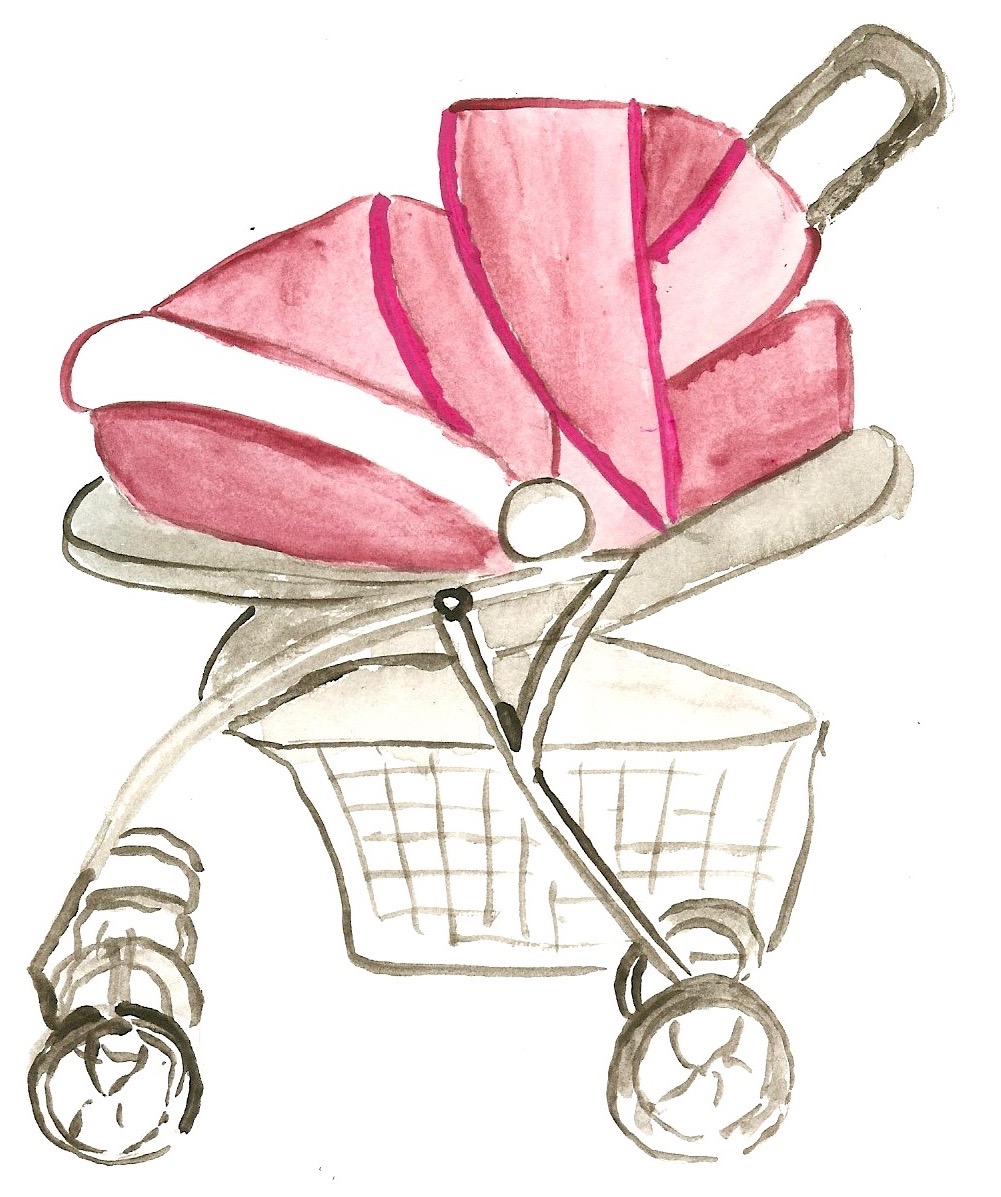
how to correctly ‘throw’ open the stroller (instead of kneeling on the hot cement in front to the hospital valet stand in white pants frantically pushing every available button); how to correctly insert the detachable car seat into the ‘easy open’ stroller; how to correctly detach the detachable car seat from the stroller (instead of breaking down in front of the nurse checking baby weights and begging for help!);
how to correctly attach and unattach all the instruments of torture to the breast pumping machine;
how to correctly attach and detach smell proof bags from a very sophisticated diaper pail (which still defeats me so when no one is looking, I just stuff the damn diapers in the garbage under the LA Times which I haven’t had time to read yet anyway!)
Who knew life with a new baby was so technically complicated? The best news is mother and baby are doing great! That’s all that counts, as we all know.”
                       — Judy

Wednesday, October 19, 2016

Life and Death Lessons

Things I’ve Learned in the Last Week, or Growing in My Third Third:

I learned that losing a parent is painful.


Yes, yes, I knew that, but I didn’t KNOW that. It’s like when I first had a baby. Suddenly I felt like I needed to apologize to every friend I knew with children. I’d had no idea it could be so HARD. I didn’t know about the sleep deprivation, the worry, the demands on your time. I didn’t know about the disruption to life-as-you-knew-it. I didn’t know that finding the right childcare was so hard, that you’d be torn emotionally in so many different ways. These were abstract facts to me, not life-wrenching realities.

The same is true with losing a parent. I’d offer condolences, but I didn’t offer CONDOLENCES, if you know what I mean. I didn’t know you’d be shaken to your core, that the shaking would last and last. That anyone could be this sad.

I’m sorry. I didn’t know.

I learned that expressions of sympathy and comfort make a huge difference.

Yes, it was right here in this blog that I made fun of greeting cards: “NO ONE looks at old greeting cards.” But I didn’t know the power of new greeting cards. Returning from my mother’s burial, picking up the held mail at the post office, I was moved by the sympathy cards. I was moved by the cards that came from people relatively distant in my life, from my past, from my synagogue. It made me feel part of a community. They took time out of their lives to comfort me.
I was moved by the phone calls, the visits, the hugs. I was moved by the comments, the emails, the “loves.” I was honored by all the requests to help. It reaffirmed me as a member of the larger community of human beings: we all hurt, we can all comfort.

When she was little, we never let Sophie play with or wear a gift until the thank you note was written. We wanted to teach the necessity of demonstrating gratitude. It didn’t occur to me that I should also teach – and learn – the necessity of showing support.

My sister has said the same thing. In our Third Thirds, we want to be card and note writers.

I learned that rituals exist for a reason. They are in place to help people in difficult times.

When I had a child, I joined the ranks of mothers from the beginning of time. I was a mother in a long line of mothers. When I became bat mitzvah, I affirmed my place in a long line of Jewish women. And now, my mother’s death placed her – and me, as a mourner – in the Jewish tradition.
Prior to burial, my mother’s body was bathed and purified in a ritual called taharah by a group of women known as the Chevra Kadisha, a holy society. My sisters liked that; they thought of how my mother loved having lotion rubbed into her dry skin, how she would have appreciated being bathed. My mother was buried in a plain shroud in a plain pine box. To my mind, it asserts dignity and respect for the deeds of her life, not any material acquisitions. All these things make me feel better.

In the Jewish tradition, there is a seven day mourning period known as sitting shiva. You’re just supposed to sit at home, receive visits, let your grief out. And here, life has intruded. I had too many commitments – my own good deeds in the world, I guess – that I couldn’t break. But I really appreciate the value – the necessity – of shiva.

Susan said to me, “Please honor me with the mitzvah of helping you at this time.” What an exquisite way to offer help. Now I understand where rituals come from.

I learned that preparing with Advance Directives, Health Care Proxies, and The Conversation Project were critical.

Again, that’s one of those abstract facts that became real in the last week. I’d pushed my siblings to get all the paperwork agreed to and signed. Now, a week later, I know my mother could not have died the way she wanted to without the preparation we did. With The Conversation Project starter kit, I knew how my mother wanted to live her final days. With the Advanced Directives, we could ensure that would happen.

It’s all about dignity and respect.
I learned that de-cluttering accomplished BEFORE my mother died was absolutely the best thing.

My mother and we siblings had already cleared out the family home. Truckloads of furniture, memories, and photos were distributed, dealt with, disposed of years ago. My mother was an active player in all this as she launched her own downsizing. In July, her apartment was further condensed. When she died, she was surrounded by only her favorite things. My siblings and I dealt with it all in a few hours.

By de-cluttering early, my mother gave herself the gift of lightening her life. I still remember us asking where she wanted to put the photo albums in her new apartment. “I’ve had them for years,” she said, “It’s time for one of you to take them. I don’t want them filling up my new place.” By getting rid of the weight of her old life, my mother could make room for a new life.

She gave us the gift of that lightness, too. Everyone who has dealt with parental clutter says the same thing: I don’t want my kids to have to deal with all this. I cannot imagine sorting through 90 years of memories and possessions while grieving. Thank you, Mom, for sparing us that.

Mostly, I’ve learned that life is short. Live it well.

Tuesday, October 18, 2016

An Orphan in My Third Third

Did you feel it? The shift in the universe? Like the gravitational waves, “ripples in the fabric of spacetime from a cataclysmic event”? Or maybe it was just my universe.

My mother died.

We’d had a happy time, sitting in the sun, looking at old home movies. She was all settled, ready to be released back home. All good. I flew back to Alaska. Two days later, she was nonverbal, back in the hospital. Suddenly, things were “grave,” according to the doctors. She died before our planes landed and cars arrived.

My mother died peacefully with Cousin Larry, Jessica, and Kathy at her side, with her best friend Gloria on the other side. They say it was easy and peaceful. I thank everyone she wasn’t alone, but I worry whether she was frightened. Whether we all are.

My mother had a big chair in her and my father’s bedroom. When I came back from school dances, no matter what time, I would sit in that chair and tell her about the night. Did I have a good time? Did any boys ask me to dance? Anything special? She let me go on and on. She asked questions, she never fell asleep on me.

Now I need a big chair, and I need to tell her how her death is rocking me.
I didn’t expect this. I somehow thought I was “ready” for this news. I even thought it was the best way for things to go, that my mother needed to be spared a life of endless readmissions to the hospital. That she didn’t want to live in a world that had become so confusing to her.

And now I find myself bursting into sobs when just nothing at all triggers it. My mother died two days before Yom Kippur. I sat in her synagogue with all the contemplation that Yom Kippur fosters, looking around at “her” space, and I think my whole self just broke.

The thing is, my mother and I had a “prickly” relationship. I don’t understand some of the reasons, but it was prickly enough my mother could never broach the subject. Yet I was her only child to have a child. I KNOW in the core of my being how powerful mother love is – I know of nothing else so gripping – so I know my mother felt it for me. My mother felt it for her four kids. And now there’s a shift in the universe because that force is gone.

A long time ago, I was featured at some event and asked the organizers for an extra copy of the program to send to my mother. One woman said she used to do the same thing, and she noticed each time she couldn’t after her mother died. As my siblings and I went through my mother’s things, I ended up with piles and piles of all the photos, programs, news clippings, stories, and letters I’d sent her over the years. Even from far away, my mother was … my witness. The keeper of my story. Or something like that.
Now my life is … unobserved. I don’t know how to describe this.

My father died when I was 26 and he was 56. But to me, he was “old” and I was young. Not so young as to feel robbed, but not so old that his mortality leaked into me. I was 26, I still had a mother, and death was something that happened to old people. But now I’m in my Third Third, and the loss of my mother puts our generation “up next.” You find yourself doing subtraction, estimating how many years you have left. Mortality is beyond hinting; now it plants its shadow solidly in your path.

I’d said my Third Third was my mother’s Ninth Ninth, and that was worrying, stressful, challenging. Sometimes it was a problem bigger than me, a whole-society problem. Now my Third Third is motherless, and it’s still bigger than me: a sadness so very, very big.

My siblings and I talked about an afterlife. None of us believe in one. I believe in spirit, in soul, in things not observable; I just believe they die, too. But I do believe in memory, in the aftereffects of good deeds at work in the universe. My mother left a lifetime of good deeds behind. Let me share her obituary with you here.

Tonight as I was cooking dinner, my thoughts just glanced in my mother’s direction as they often did. And then I remembered that she’d died, and the universe shook again. I’ve lived 3,000-4,000 miles from her since I was 17, and yet she was always a presence. Now she’s an absence. And no matter how much I think of her or cry over her or wish about her, it does no good. The hole is big and real and permanent and sad.

Sunday, October 9, 2016

Who is my mother?

A visit with my mother and my philosophical side runs rampant with questions. Now back home, I sit here and wonder about our “self-ness.” What makes me Barbara, and would I be Barbara if all the memories that I’ve collected over my life were gone? Is there some core of Barbara that has nothing to do with what I’ve experienced, seen, done, etc.?

So who is my mother now that she’s virtually memory-less?

When I’d asked before the trip whether I was still My Mother’s Daughter, one reader, The Noodler, commented that “she will know that you are someone important to her.” And yes, she did! When I walked in the room, her face lit up. She knew my sister and I were there to see her, not someone else in the dining room. So yes, I am still my mother’s daughter, but who is my mother?

Right now, she has a lump the size of a tennis ball on her forehead and black and blue marks lining her temple, cheek, neck, and under her eyes. Our guess is that she fell in the bathroom and her head hit the support bars on the toilet. We’d need an NCIS crime scene analyst to know what happened because my mother asks, “I fell? When did I fall?” So she is in rehab before returning to the dementia wing and her room.


On prior trips, I was intent on “rescuing” Mom from rehab so she could get back to her normal life. Now I know there is no rescue. While that relieves a lot of pressure, it also leaves these philosophical questions. At one point, my sister and I wheeled her onto the patio into the warm sun.
Still like my mother: She loves warm sun. She offers money so we can buy something nice. She doesn’t like raisins. She would be upset that she hadn’t been to the hairdresser.

Not like my mother:
My mother was a voracious reader and major movie-goer. She helped found a whole film center. She wrote poetry. Now she can’t read because by the time she gets to the end of a sentence, she can’t remember the beginning. She dozes off in movies. My mother was chatty with the energy of an Energizer Bunny. Now she sits and doesn’t really engage with her company. She sits. (But this is rehab after an injury and she’s not really just a sitter in her normal life, but still…)
When I look at myself, I think my self-ness is tied up in curiosity. I have questions about everything and find just about everything worth exploring and asking about. Who would I be if I just sat?

I took one reader’s advice and had a conversation with my mother, telling her the things I’d want her to know just in case I didn’t see her again. She appreciated it, I guess. It’s hard to tell because her responses are muted.

My mother never made an ethical will or legacy letter, but she communicated her values, loves, and hopes regularly. All her life. We know what her Mom-self thought and wanted.

But this later version Mom: Is she happy? Does she think about happiness? Is just sitting like interminable waiting or is it like being peaceful? Is this what she would want for her 90s?

I’m not sure she could answer these questions. In a quiet moment, I tried asking what she was thinking, but she looked confused and told me she wasn’t thinking at all. Should I have tried again? Should I have been more specific? But look at those happiness questions: they are insensitive if not harrowing questions. My memory-less mother is sitting in a chair and I’m going to ask her if life turned out the way she wanted?

Insensitive? Harrowing? Is that more about my fears or her happiness?

Wednesday, September 28, 2016

A Recipe for Clutter

Years and years ago, I had accumulated enough recipe clutter that I needed a way to organize it. I took an empty photo album, added tabs for the sections, and slid the recipes under the plastic. The tabs say things like “Main Dishes,” “Salads,” etc. The binder is big and red and full of favorites.

Well, not big enough. There are no more empty pages.

Now, when I tear a recipe out of a magazine, it has no clear destination. It sits on the counter for a few weeks, awaiting relocation. (Along with all the other clutter-orphans awaiting their own relocation.) Recipes are a recipe for clutter. Eventually, I stuff them into the front of the big red binder. Loose. Now the big red binder is REALLY big.

But it’s an unstable kind of big. Unstable as in when you pull it off the shelf, all the loose magazine clippings fall out all over the place.
Something had to be done.

So I sat down one day and culled the recipe pile. Created a big recycling pile and a little pile of sorted recipes. (In your Third Third, you know you are NEVER going to make something requiring more than five steps….) I put them in folders, but this time – after years of cooking – I had more specific categories: Pasta, Vegetables, Rice and Grains, Salmon. Eleven relatively thin folders. Plus one folder titled “Favorites,” those things that we dub: the repertoire.
And then it occurred to me: What if eggplant were in season and I wanted to cook with eggplant? What if the eggplant recipe was in Pasta or Rice? How could I find it? Pasta comes with other ingredients – how would I find them? And what about the wheat berry salad; does it go with Grains or Salad?

My friend Judith says the only solution is to make an index. She’s making an index. To me, an index is more than a to-do list item; it’s an insurmountable hurdle. It would need constant updating. Before I’d get to that, I’d make a list of all the movies I’ve seen so I’d stop coming home from the library with DVD repeats I don’t remember….

So I took the dilemma to my friend Sharon-of-the-400-cookbooks. Sharon has two file cabinet drawers of folders. Over time, just as I’d discovered, the categories refine themselves. Sharon’s “Meats” split off into “Beef Brisket” and “Lamb.” “Soups” spawned “Tomato Soups.” She has separate folders for “Avocados” and “Dates” and “Asian and Curries.” The problem Sharon is facing is that her favorites file is now two unwieldy files thick so she has to figure out some way of culling it.

Then I took the dilemma to my friend Marj. I’d remembered that Marj had a meticulous shelf full of white binders neatly labeled with her categories. Well, the four feet of binders is now eight inches of folders – a de-cluttering victory for Marj!

Marj sorts her folders by function, not by ingredients: “My big confusion is does beef stew go under Beef or under Stew or under Slow Cooker. Again, I look at the function – if I want to make a Crockpot meal, I only want to make a Crockpot meal, so everything Crockpot goes into one Slow Cooker folder, regardless of ingredients.”

All of us – good de-cluttering Third Thirders – are going through our cookbooks, identifying the keepers, copying them, and donating the cookbooks. In the meantime, Sharon puts flags on her cookbook pages. I’m going to start doing that because a good recipe tends to get lost in a closed cookbook, but Sharon even keeps a Dinner Party Journal citing the page numbers and cookbooks of what she prepared.
In my mother’s Third Third, when her last child left home; she ate out, brought home leftovers, and stopped cooking.

What’s your recipe for de-cluttering recipes?

Sunday, September 25, 2016

How to Comment / How to Share

Now I have a discovery: I have finally figured out how to comment on my own blog! I mean, I know how to comment on it as me, but I wasn’t sure how you could comment as you. The problem is that list of “profiles” for you to choose amongst, and I have no idea what they are. I’m sure you don’t either. (Repeat: We are not tech dinosaurs!)

So here’s how to comment on the blog as you:
  • If you get the blog by email, click on the title in blue. That will take you to the blog website.
  • If you get to the blog through the home page (3rdthirds.blogspot.com), at the end of each post where it gives the time I posted, it either says “2 comments” or “No comments” or however many comments. Click on that.
  • Now you’re all at the same place. Scroll to the bottom and you’ll see “Post a Comment” and a box to type it in.
  • The confusing part is the “Comment as: [Select profile…]” Click on that and there are a bunch of choices, most of which I have no clue about.
  • The easiest, for many folks, is Google Account, which then asks you to sign in.
  • Then there’s Anonymous, but if you want to leave your name, what do you do?
  • This is my big discovery: Click on Name/URL, enter your name, and you don’t have to fill in a URL! It will still work! You don’t have to have any special account, secret handshake or password!
  • Then you just click “Publish”

Now, how to share a blog post that you really liked:

And I am incredibly excited because this represents a technological victory! I found a problem the tech developers hadn’t!

At the end of each post, after the last sentence, are a line of six little gray boxes. The first box lets you email the link to the post, and the other boxes give you the option of posting to Twitter, Facebook, Pinterest, etc. But these are tiny, ugly, gray boxes, and I wanted bright, colorful, big boxes.
So I went to AddThis to get their boxes, but their boxes didn’t work on my blog. No matter how late I stayed up trying to make them work. Finally, Mike in Support, wrote “Thank you for bringing this to our attention.” I’d discovered a new problem! Mike made a video of how he fixed it. He fixed it by clicking here, there, everywhere, copying, pasting, whizzing around, erasing, fixing, zipping all over. I had to watch it twenty times with the pause button going constantly, but I finally got it! It works. At the very end of the post you will now find...


This should make it easy to share. Or: while on Facebook, go to the Our Third Thirds page, and share from there. Or on Pinterest, it’s Our Third Thirds Blog.

Whew!

And now, I look forward to hearing from you … and all the people you share with!

Wednesday, September 21, 2016

Still My Mother's Daughter?

I am leaving next week for New York to visit my mother. This may be the first time I see her and she’s not sure who I am.

Once before, she went to breakfast and returned a few minutes later saying, “I didn’t realize you were my daughter!” Someone at breakfast must have asked how her daughter’s visit was going, and Mom realized that the person sleeping on her couch was me. But that was only momentary; all her Barbara-memories quickly lined up.

But recently, when I talk to her on the phone, I feel like she’s “being happy” or “being nice.” I can’t really describe it, but I don’t feel the ring of truth. It’s most obvious with the “add-ons” to her four kids – spouses, grandchild – but I feel it with me, too. I could be a waitress she’s friendly to.

In July, we moved her into the dementia unit of her assisted living. She is much, much happier there since they provide the near-constant company she craves. No more wandering in the night looking for desk clerks and nurses to sit next to. She says it’s the “just right” place for her, and my siblings and I would be greatly relieved except….

Except that she’s frequently in the hospital for “unwitnessed falls” on her way to the bathroom in the middle of the night. (Thank goodness her bones are so dense they never break.) My poor sister – the only contact in the same time zone – now sends emails to the rest of us with “Again” or “One guess” in the subject line.

My mother has always been the hub of our family’s wheel. When we all left home, we’d telephone Mom and get the updates on everyone else. If someone had good news, she’d pass it on. If someone was sad, she’d tell us to check in and rally her. She was the Master Link.
Now she’s still the connecting force amongst us, but it’s about her, not with her. She’s still central, but not The Center. And what she is for us is not joy, it’s worry. Concern. My sister clenches when my mother’s area code comes up on Caller ID. I clench when I see subject lines like “Again” or “One guess.” Or even just “Mom.”

My mother used to wear Blue Grass toilet water from Elizabeth Arden. (That’s what they called it.) She’d splash it on after a shower and ask us to get it for her for Mother’s Day. The smell of Blue Grass is Mom. A reader, Michele, suggested that smells might be good for her Memory Box so I will try that.
I am bringing the videos I’d made of her telling stories from her childhood. The woman in those videos is so startlingly Mom – her vitality, her wit, her language. I wonder whether seeing her younger self will be a pleasant experience or a disturbing one.

My last few visits with my Mom have been crisis visits or task visits. I have either gotten her out of rehab, nursed her through the flu, or bought supplies, fixed the car, organized the paperwork. I have hired personal aides, met with facility administrators, taken her to the bank. In between, we have played bingo, watched movies, and looked through albums; but at the end of the visit, my mother says, “This was a great visit. We accomplished a lot.”

“Accomplished a lot” because my mother’s main concern is that her life get handled around her. I don’t think she’d say “This was a great visit. We laughed a lot” because she forgets a photo the instant we turn the page, forgets a story the second it’s finished being told. But somehow, the comfort of being taken care of lingers.

I’d scheduled this trip as a pleasure trip. A simple, have-happy-times-together trip. But now she’s back in the hospital after another fall. She’ll probably be discharged in a couple of days. Maybe fall again and go back in. There are no simple, have-happy-times-together trips.

I don’t know what will happen “in the flesh.” This is the first in-person visit for any of us since July. Will my mother snap to recognition that I am her daughter Barbara or maintain that superficial friendliness I sense on the phone, that cover for not really being sure of things? Will there be a “Mom” there … or some kindly older woman? Am I still my mother’s daughter?

I guess I’ll see.

Sharing Button